Begin Japanology
8.8·2008 - 2014·28m·7S·ended
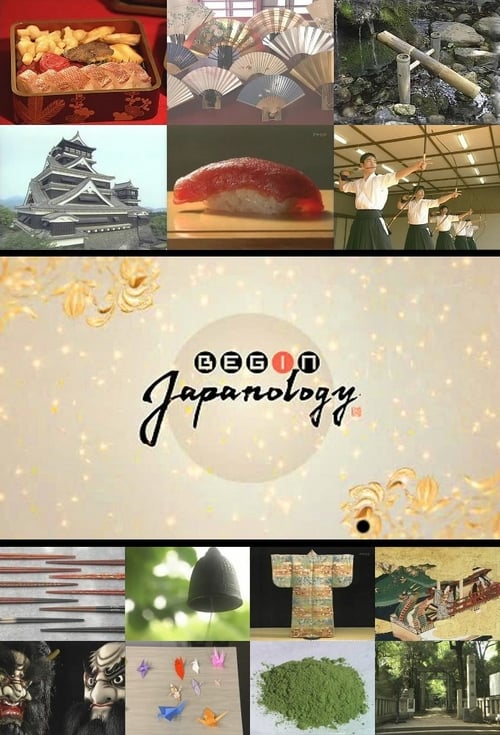
BEGIN Japanology invites you into the world of Japanese culture, both traditional and modern, explaining how traditions evolved and the part they still play today in people's everyday lives.
BEGIN Japanology invites you into the world of Japanese culture, both traditional and modern, explaining how traditions evolved and the part they still play today in people's everyday lives.
BEGIN Japanology invites you into the world of Japanese culture, both traditional and modern, explaining how traditions evolved and the part they still play today in people's everyday lives.
No reviews yet
Sign in to write the first review
About the origins and evolution of the Japanese "boxed lunchset".
A short look on the history, present and future of the famous fishmarket in Tsukiji, Tokyo.
Explaining the integration of Western meals into the Japanese diet.
Kyodo (loosely translatable to "archery") is not so much about hitting the target as it is all about the form, skill and practice of the art.
A look at the phenomenon of dagashi-ya ("thrifty sweetshops") and the role they played in a community and it's growing resurgence in modern society
The "soroban" (Abacus) - a calculation tool no longer used in the Western world but still a common sight in Japan, where education and businesses use it with great succes.
Bamboo, a native Japanese plant of the tree family, has many uses. This episode explores a few, such as tools, decoration and even as food.
During the Japanese summer, fireworks are a daily phenomenon, as such, this episode shows it's origin, production and techniques.
The wall scroll is not just used for decoration, it has a special role during the tea ceremony that is still practiced in Japan. From the special placement in a room to the padding of the scroll itsel…
The first part of two episodes focussing on the ancient Japanese epic that left a huge impact on the cultural history of Japan, "The tale of Genji", written in the Heian period. This part details the …
Part two continues with a look on the Heian period and the effect the epic had on Japanese cultural history.
Matcha, the powdered residue of ground green tea leafs, has been a key ingredient in the Japanese tea ceremony for more than a millenium, but nowadays it's also being used in more than just tea.
A key player in the skyline of Tokyo, Tokyo Tower is a source of entertainment and inspiration. A look on it's construction and influence.
This episodes investigates the staple Japanese food, "Sushi" via it's origins and ingredients.
During Japan's civil war era, many castles were erected as strongholds and displays of power by the local warlords.
Since ancient times, people in Japan have devoted themselves to the traditional art of calligraphy, shodo. Writing characters with ink on paper, they create works that express the inherent beauty of t…
In Japan, festivals are known as matsuri. Many matsuri are colorful and boisterous occasions. Matsuri are typically associated with a Shinto shrine. Local people gather to pray and give thanks to the …
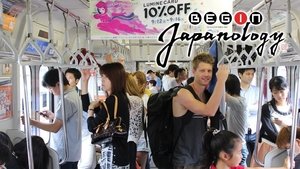
E22 · Subways
Japan's architectural use of wood makes it a country particularly vulnerable to fires.
Mochi, a glutinous dough made from steamed rice, is a favorite food among the Japanese. At least two people are required to make mochi the traditional way: a mallet man and a flipper. The movements of…
E2 · Watches and Clocks
Around 20 million people live in Japan's "snow zone," where a single winter brings at least five meters of snow altogether. Japan is distinct in having so much snow so far south. Life in the snow zone…
In Japan, traditional wooden furniture is assembled without using a single nail. Advanced sashimono joinery techniques have been passed down for centuries. There are around 30 different basic types of…
Cranes have been revered throughout Japan since ancient times. Forming almost inseparable mating pairs, cranes are a symbol of harmonious married life. Crane motifs are widely used on wedding clothing…
Knives for culinary purposes have been made in Japan for centuries, using a technique perfected by Japanese swordsmiths. The blades are sharpened on only one side, ideal for cleanly separating fish fl…
People of all ages have long been drawn to Japan's seas, rivers, and lakes to enjoy fishing. Over the centuries, the Japanese have used great ingenuity to develop unique tackle such as lacquer-coated …
E12 · Armour
Japanese armour was developed to offer protection from spears, arrows, and swords, while allowing agile movement on rough terrain and steep slopes. After the introduction of firearms, the future shogu…
Judo is practiced by around eight million people in 199 countries and regions, making it the most widely played sport that was developed in Japan. Players grapple with each other on a mat and win by p…
Taro Okamoto was Japan's leading avant-garde artist of the 20th century. His memorable phrase "Art is an explosion!" became a well-known expression, winning him popularity with the general public. Oka…
Osamu Dazai (1909-48) was one of Japan's preeminent modern novelists. Born in wealthy circumstances that he later rejected, Dazai drew attention as a writer when he was 26 for Flowers of Buffoonery. H…
Kenzo Tange laid the foundations of modern architecture in Japan. On August 6, 1945, the day the U.S. detonated an atomic bomb over Hiroshima, Tange lost all that mattered most to him. Four years afte…
As a child, Maehata studied traditional swimming techniques passed down from the days of the samurai. At 18, competing in the 200 meters breaststroke at the 1932 Summer Olympics, she missed out on gol…
E18 · Toilets
Japan is famous for its high-tech toilets with water spray functions and lots more, and toilet technology continues to evolve in unique ways. After months of research, a Japanese toilet manufacturer f…
Japan leads the world in building ever-faster and ever-quieter lifts, or elevators. In 2004, Japan's long history of engineering know-how was used to build the world's fastest elevator in Taipei 101, …
Japan is the largest producer of motorcycles in the world. It has proudly held this title since 1960. Today, Japan produces all sizes of motorcycles. The Honda Super Cub is an especially popular small…
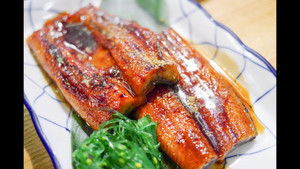
E21 · Unagi Eel
Japan is the world's number one consumer of eels, or unagi. Grilled, glazed unagi ranks alongside sushi and tempura as one of the best-known types of Japanese cuisine. It is even reputed to boost stam…
This month, we present a special talk-show series called Japanophiles, featuring lively interviews with foreigners living in Japan. When ink-brush artist Ilan Yanizky paints, he splashes vibrant color…
This month, we present a special talk-show series called Japanophiles, featuring lively interviews with foreigners living in Japan. Silvain Guignard came to Japan 28 years ago and is now a master of t…
This month, we present a special talk-show series called Japanophiles, featuring lively interviews with foreigners living in Japan. Stéphane Danton is breathing new life into Japanese tea. He subtly a…
This month, we present a special talk-show series called Japanophiles, featuring lively interviews with foreigners living in Japan. American potter Dorothy Feibleman lives and works in Japan where she…
In Japan, scrumptious looking dishes like marbled beef, spaghetti, and fluffy omelets often sit in restaurant windows tilted at gravity defying angles. Why don't they spill? Because the dishes aren't …
Japan is home to over 30,000 insect species, and insects are a familiar part of Japanese life. For centuries, staging battles between insects has been a popular pastime in Japan, and Japanese children…
Imagine that you have two equally-sized square sheets of paper. How would you cut each sheet of paper so that the pieces could be combined to make one larger square? This problem comes from Japan's in…
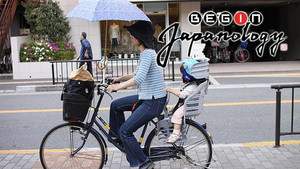
E29 · Bicycles
In Japan, more and more people are riding bicycles to go shopping, to commute, for exercise, and for leisure. Gunsmiths pioneered bicycle-making techniques in Japan. In the late 19th century, with the…
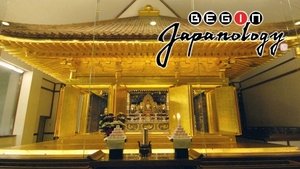
E30 · Chusonji
In June 2011, the structures and artifacts of Hiraizumi, a town in earthquake-devastated Iwate Prefecture, were collectively declared a UNESCO World Heritage Site. The jewel in this crown is the Buddh…
E31 · Seaweed
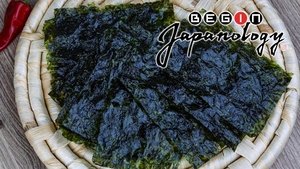
From time immemorial, Japan has reaped the bounty of the sea that surrounds it. Fish, yes, but just as important is seaweed. It's an essential part of the Japanese diet. Because seaweed is highly nutr…
E32 · Charcoal
For centuries, charcoal was a key resource in everyday Japanese life, and it is still used in a great variety of ways today. For Japanese cuisine, which uses simple preparation methods to get the most…
E33 · Rain
Japan gets a lot of rain, which can be both a blessing and a curse. Rain falls year-round in Japan, but differs from season to season. Tokyo gets its fair share of rain, but some areas of Japan receiv…
E34 · Golf
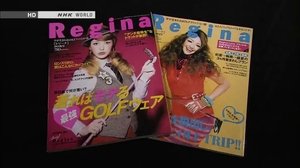
Japan loves golf. The number of golfers in Japan is around 10 million - 1 in every 13 people. But playing golf in Japan can be expensive. If you want to hit the ball but can't go to the course, you go…
E35 · Shipbuilding
Japan is a shipbuilding superpower. About one-fifth of all the world's ships are made here. From advanced luxury cruise ships to gigantic oil tankers, cutting-edge technology and traditional knowhow p…
This month, we present a special talk-show series called Japanophiles, featuring lively interviews with foreigners living in Japan. For so many people affected by the Great East Japan Earthquake, life…
This month, we present a special talk-show series called Japanophiles, featuring lively interviews with foreigners living in Japan. Noelke Muho is a Zen Buddhist priest from Germany. For nine years, h…
This month, we present a special talk-show series called Japanophiles, featuring lively interviews with foreigners living in Japan. A hallmark of modern Japanese culture - in anime, video games, even …
Karaoke is one of Japan's best-known forms of entertainment. You choose your favorite songs and sing along anyway you like. There are two main places to enjoy karaoke in Japan: "snack" bars, where you…
The world sees the Japanese as workaholics. Believe it or not, Japan has the most public holidays in the industrialized world. But it is also true that Japanese workers take fewer than half their allo…
E41 · Red Sea Bream
The red sea bream is one of Japan's favorite fish. People have been eating it since ancient times. Long considered a lucky fish, red sea bream is essential to Japanese festivities and rituals, from Ne…
From food to clothing to daily necessities, you can find anything you need at a Japanese shopping street, a long road lined with all kinds of stores. There are 13,000 of them across Japan. Many shoppi…
E43 · Chickens and Eggs
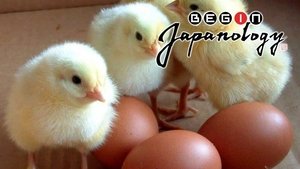
The chicken was long regarded as sacred in Japan. Today, the bird has lost that mystique, but it remains an essential part of Japanese life. The Japanese have produced remarkable breeds of ornamental …
Ekiden is a long-distance relay race. Instead of a baton, a sash is handed off. This sash is the secret to ekiden's widespread appeal in Japan; it is a symbol of perseverance and selfless duty. Ekiden…
E2 · Batteries
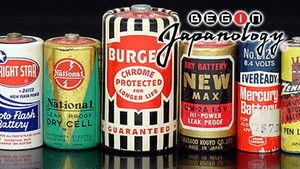
Batteries... We use them so often that we hardly even think about it. Mobile phones, cameras, portable audio players - even your car keys might have a battery inside. Japan makes 4.8 billion batteries…
People the world over love to enjoy a cup of coffee in a cafe. Japan is no different. Cafes first appeared in Japan in the late 19th century, and they have continued to evolve with changes in society.…
E4 · Hot Water Bottles and Pocket Warmers
Hot water bottles and pocket warmers are just the thing for Japan's cold winters. Hot water bottles first came to Japan from China in the 16th century. The first pocket warmers are thought to have bee…
Ikebana: the traditional Japanese art of flower arranging. Each elegant arrangement is made with seasonal flowers and plants cut to perfection. The idea of using flowers as decoration first came to Ja…
E6 · Excavators
Today, 80% of the world's excavators are built from Japanese designs. There's hardly a country in the world where Japanese excavators haven't made a contribution. And Japanese engineers continue to de…
Forests have covered Japan since ancient times, and today they make up about 70% of the country's land area. Forests have long been vital to the Japanese way of life. Even the center of Tokyo has a la…
This month, we present a special talk-show series called Japanophiles, featuring lively interviews with foreigners living in Japan. Dhugal Lindsay is an Australian haiku poet. Lindsay's haiku, written…
This month, we present a special talk-show series called Japanophiles, featuring lively interviews with foreigners living in Japan. Noh theater is one of Japan's great traditional performing arts. Tod…
This month, we present a special talk-show series called Japanophiles, featuring lively interviews with foreigners living in Japan. The taiko is Japan's own traditional style of drum. These days, it's…
This month, we present a special talk-show series called Japanophiles, featuring lively interviews with foreigners living in Japan. Sake is an alcoholic drink brewed from rice and water. It is quintes…
Kabuki is one of Japan's best-known traditional performing arts. It combines elements of theater, dance, and music. In 2009, it was recognized as a UNESCO Intangible Cultural Heritage. Dazzling costum…
Wild vegetables have long been served at the Japanese dining table. With their great variety and low calorie count, they have recently become popular as health foods. But they also play important role…
Since ancient times, there has been a belief in Japan that horses are messengers of the gods, or even gods themselves. Samurai shared their fate with their loyal horses; riding a brave steed was a gre…
E15 · Massage Chairs
In Japan, stress is a part of life. Giving and receiving massages, particularly shoulder massages, is a Japanese institution. And over the last several decades, the massage chair has become an equally…
The Shikoku Pilgrimage involves visiting 88 Buddhist temples spread across Shikoku, the smallest of Japan's four main islands. The route is 1,200 kilometers long, and to walk it takes around 50 days, …
E17 · Regional Fast Food
When you think of regional Japanese food with a long history, you might think high prices and refined presentation. But Japanese "regional fast food" is unique and inexpensive everyday fare, and it is…
E18 · Department Stores
The first department store appeared in Japan about 110 years ago. It evolved from a kimono shop. With their world-class goods, department stores soon became popular as centers of culture and of the la…
The kimono is the traditional costume of Japan. Yet even the most sumptuous kimono is constructed quite simply: just a few strips of fabric sewn together. With their wide variety of seasonal designs, …
E20 · Aquariums
Japan is home to 20% of the world's public aquariums. And it has all kinds, from places specializing in one kind of sea life - like jellyfish or salmon - to theme parks offering splashy shows with mar…
E21 · Confectionery
Various sweets first came to Japan from the West, but the Japanese put their own distinctive stamp on them. Today, this "Western-style confectionery" is an important part of Japanese culinary culture.…
E22 · Dolls
From ritual charm to children's toy, from star of the stage to life companion, dolls play a wide range of roles in Japanese society. Japanese dolls have their origins in religious charms that absorbed…
Mosses are some of the most primitive terrestrial plants. They have no roots - only leaves and stems. But moss is deeply embedded in the Japanese way of life. You'll even find the word for moss in the…
Each summer, Hanshin Koshien Stadium in Nishinomiya City, Hyogo Prefecture, becomes the stage for a drama that grips the entire nation. Here, high school baseball teams from across the country assembl…
E25 · Planetariums
Today, there are about 400 planetariums in Japan. That's the second largest number in the world, after the US. The world's largest planetarium, with a dome 35 meters across, is in Nagoya. Japanese peo…
Adam Booth is an English-born master of Nihonga, a kind of painting that uses traditional Japanese methods and styles. Nihonga requires special materials, including unprocessed natural pigments used i…
Just about everyone in Japan knows Dave Spector. It's been almost 30 years since this American first appeared on Japanese television. He currently makes more than 10 TV appearances a week, sharing the…
Australian-born potter Euan Craig is a master of Mashiko ware. Mashiko ware originated in the town of Mashiko. Most Mashiko-ware ceramics are practical vessels like dishes. Craig first encountered Mas…
The shamisen is a traditional three-stringed Japanese musical instrument. Its unique sound has been enjoyed in Japan for centuries. When you play the shamisen, you strike the body along with the strin…
The crested ibis (scientific name Nipponia nippon) has beautiful pale rosy feathers that have been loved in Japan for centuries. The crested ibis used to live all over Japan, but at one point, because…
The abalone is a shellfish found along Japan's rocky coastline. Abalone have shallow, spiral shells that look like dishes, and they have been treasured by the Japanese since ancient times. Abalone is …
Tokyo Station's 100th anniversary is approaching. With 28 tracks, and 3,000 trains arriving and departing each day, it is Japan's largest rail terminal. Over the years, Tokyo Station has been the site…
Tokyo Skytree, completed this year, rises 634 meters. The world's tallest broadcasting tower, it's packed with the finest in Japanese engineering. Its steel framework was assembled with millimeter pre…
Right on the doorstep of Japan's capital is Tokyo Bay. The shores of the bay are packed with industrial complexes and some of the world's most densely populated areas, but it boasts a rich biological …
Potatoes, sweet potatoes, taros, yams - these are just some of Japan's imo, a word that describes starchy vegetables with enlarged underground roots and stems. Sweet potatoes saved countless lives dur…
Many countries require signatures on contracts. But in Japan, name seals are used instead. From marriage registrations to car registrations, from birth certificates to death certificates, the stamp of…
About 5,000 species of mushroom can be found in Japan, a quarter of the world's known species. The matsutake is the gold standard of edible mushrooms. And whether it's a broth of shimeji mushroom, or …
Japan is a nation of vending machines - 5.2 million of them! You find them everywhere, selling all sorts of products. And many vending machines do much more than simply sell things. There are ultra-en…
Scissors were first created in Europe and reached Japan in the 6th century. Japan has scissors for making kimonos and for preparing sweets. It has pruning shears that make a distinctive clack and scis…
The satsuma mandarin is a citrus fruit grown in Japan's warmer regions. Its perfect blend of sweet and sharp is loved by the Japanese, who consume 60 satsumas per person per year! On this edition of B…
In summer and winter, seasonal gifts are sent to friends. At the New Year, young people receive envelopes with money inside. These are just some of the occasions throughout the year when the Japanese …
Sumo is often called Japan's national sport. Wrestlers, naked except for a special loincloth, face off, smash into each other, and battle for victory. Sumo is both a martial art and a highly stylized …
Bathroom scales are a part of everyday life in Japan. Men, women, babies, and children all use them. There are even scales specially designed to weigh your pets. In samurai times, accurate scales were…
Songs of tragic love, driven by strong emotions, are at the heart of enka, often called "the Japanese blues." Enka songs take up romantic, nostalgic, and melancholy themes. The roots of enka lie in th…
From electronics to motor vehicles, Japanese industrial products are renowned for their high performance. And they wouldn't be possible without the "small factories" that make the parts. About 90% of …
This month, we present a special talk-show series called Japanophiles, featuring lively interviews with foreigners living in Japan. Making skillful use of small spaces, Japanese architecture unites be…
This month, we present a special talk-show series called Japanophiles, featuring lively interviews with foreigners living in Japan. Originally from Germany, Ernst Seiler, who has been living in Japan …
This month, we present a special talk-show series called Japanophiles, featuring lively interviews with foreigners living in Japan. Yasokichi Konishiki from Hawaii was a "big hit" as a sumo wrestler i…
The flowers of the ume plum are a harbinger of spring. While the winter chill still lingers in Japan, the blossoming of the ume plum is a sign that spring is on the way. At this time of year, famous p…
Traditional Japanese storehouses were constructed using special methods, so as to protect valuables. They have thick earthen walls covered in white plaster, they maintain a stable level of humidity, a…
Japan today is home to 4.17 million cattle. 2.7 million are classified as beef cattle, and two-thirds of these are classified as wagyu. There are 4 unique Japanese wagyu breeds, which were created by …
The Japanese love uniforms. Uniforms are first worn in preschool. Most Japanese teenagers wear one at school, and uniforms are also required in various professions. They're even worn away from work. U…
Of the world's many household appliances, one stands out as a Japanese original: the electric rice cooker. Before electric appliances came along, rice was cooked in wood-fired clay stoves, but in the …
More than 200,000 ancient burial mounds are known to exist in Japan, and they are located all over the country. They were built for kings and powerful nobles. Along with the bodies of the dead, Japan'…
Japanese stationery goods are popular all over the world. Most stationery goods used today are originally Western in origin, but Japanese companies have continued to churn out new and improved version…
It is said that Japan has more types of bread than any other country. Buns in Japan are filled with custard cream, sweet bean paste, or even curry. Bread made its first appearance in Japan in the 16th…
Pine trees grow all around Japan, and make essential contributions to the Japanese way of life. From pine trees come gourmet matsutake mushrooms and fine calligraphy ink. Since pines can grow in harsh…
E17 · Parcel Delivery
Parcel delivery is a private-sector service that delivers small items to your door. First established in Japan, this business now handles 3.4 billion items a year. The roots of the service can be trac…
Pro wrestling battles take place every evening in rings across Japan-over 150 pro wrestling events are held every month. Japanese pro wrestling was launched by the popularity of one wrestler: Rikidoza…
For the past quarter of a century, strawberries have been Japan's best-loved fruit. Distinctively sweet, plump and delicious, Japanese strawberries started to be grown for eating around the year 1900,…
Japan is the world's calculator superpower. Rivalries between Japanese companies to make calculators ever slimmer, lighter and cheaper eventually propelled Japan to the top, and Japanese manufacturers…
This year, Japanese television broadcasting celebrates its 60th anniversary. The world's very first cathode ray tube TV was made in Japan, and Japanese TV technology continues to set the pace with tel…
Japan's biggest lake: Lake Biwa. It is 4 million years old, a source of water for 14 million people, and home to over 10 aquatic creatures that are only found there. Lake Biwa contains rare freshwater…
Tasty regional food, an amusement park or even a beach-you can find all of these things along Japanese expressways. Japan's first expressways were built in the 1960's, and half a century later the net…
In Japan, summertime is beer time. The Japanese like smooth, ice-cold beer that really hits the spot as you gulp it down. Beer came to Japan from the Netherlands in the 18th century. As the country mo…
This month, we present a special talk-show series called Japanophiles, featuring lively interviews with foreigners living in Japan. River sports have recently become much more popular in Japan, and on…
This month, we present a special talk-show series called Japanophiles, featuring lively interviews with foreigners living in Japan. Many of Japan's mountain communities suffer from aging, shrinking po…
This month, we present a special talk-show series called Japanophiles, featuring lively interviews with foreigners living in Japan. Kenny Omega is a professional wrestler enjoying a successful career …
Japan has various traditional wind instruments. Among the most familiar of them is the shakuhachi, which is essentially a hollowed-out length of bamboo. The sounds of the shakuhachi - reminiscent of s…
Wherever you go to Japan, you will never be far from a convenience store and its vast range of products. An endeavor led by a Japanese businessman brought convenience stores to Japan from the US in th…
The culture and business of used books has been important in Japan since around the 17th century. Today, the Jimbocho neighborhood of Tokyo has some 160 book dealers, many of them specialists, with a …
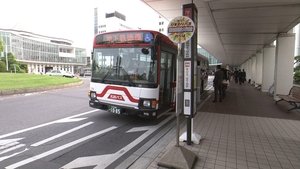
E37 · Buses