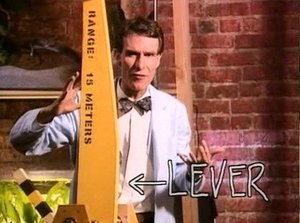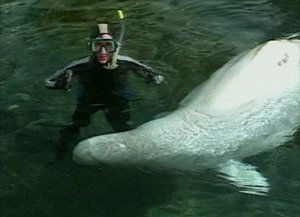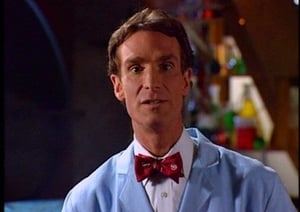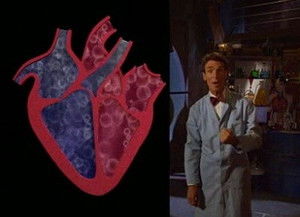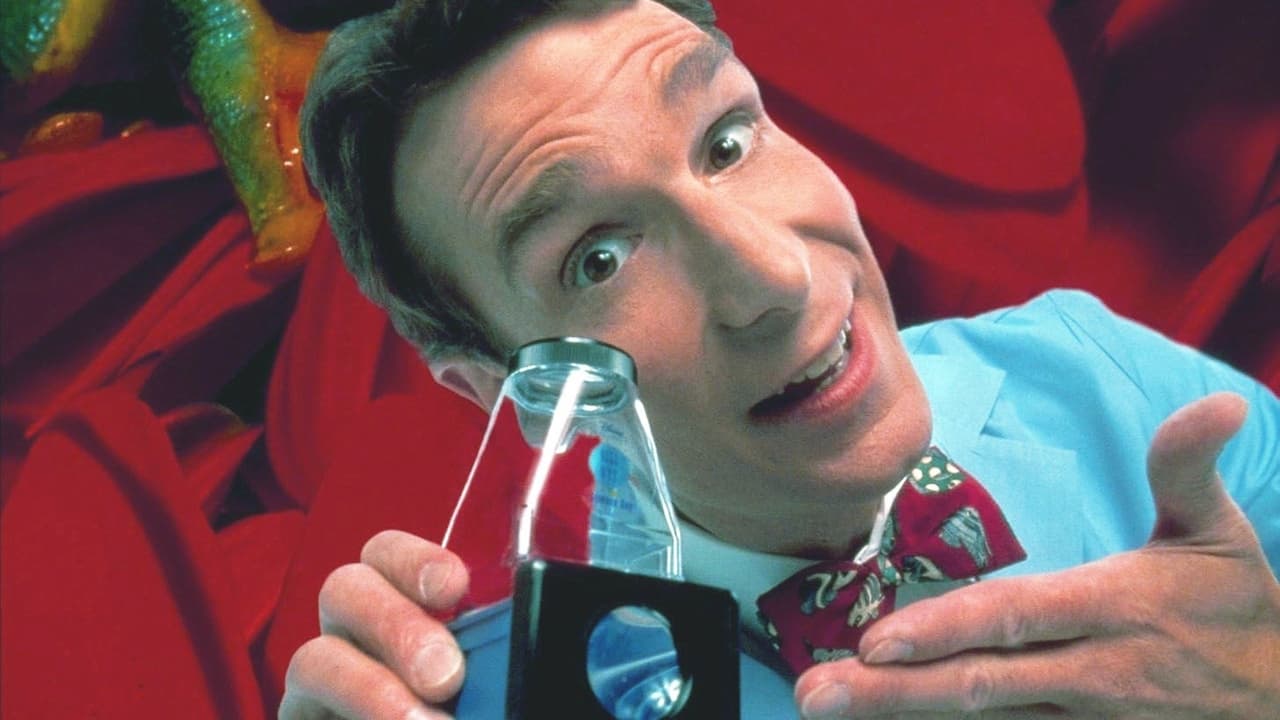
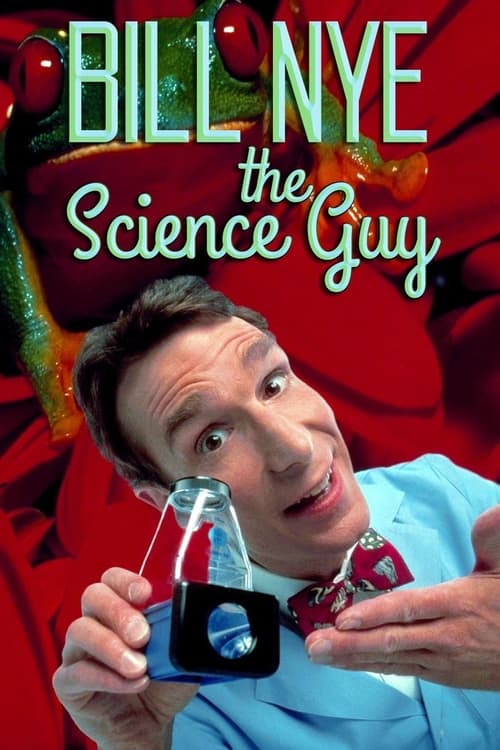

It's "Mr. Wizard" for a different decade. Bill Nye is the Science Guy, a host who's hooked on experimenting and explaining. Picking one topic per show (like the human heart or electricity), Nye gets creative with teaching kids and adults alike the nuances of science.
No reviews yet
Sign in to write the first review
E1 · Flight
Things that fly need air. Even though we walk through it, breathe it, and sneeze it, air seems to be a whole bunch of nothing. But air is there, and it's powerful. Balloons inflate because air press…
E2 · Earth's Crust
Don't just go with the flow. Settle down on the crust. Imagine a world without any crust. There would be no pies, just goopy filling, no bread, no hamburger buns, and no you or me. That's right. Y…
E3 · Dinosaurs
We can dish the real dirt about dinosaurs, thanks to fossils - traces of theses astonishing animals. Dinosaurs did not print newspapers. They did not take family snapshots or videos 65 million years…
E4 · Skin
Learning about skin science is no sweat. It's gigantic. It's gargantuan. It's your skin. It's your body's biggest organ. If you could lay your skin out flat, it would cover about one and a half sq…
E5 · Buoyancy
A hot-air balln ride and a trip to the aquarium help Bill Nye explain why things float
E6 · Gravity
Next time you throw a ball in the air, and it doesn't fly off into outer space, thank gravity. Right now, you and everything in the room where you are, is getting pulled down by gravity. If you don'…
E7 · Digestion
Take time to digest this show. They say that your food is no more inside you than a pencil is inside a donut, when it's poked through the hole. Instead of the food going in you, food goes through …
E8 · Phases of Matter
Bill Nye is going through a phase - a phase of matter. Check out the ""Phases of Matter"" episode to find out about rock-solid solids, liquidy liquids, and gassy gases. It's phase-tastic! Everythi…
E9 · Biodiversity
Ecosystems are areas where things live. Ecosystems that are biodiverse are home to a variety of plants and animals. A healthy ecosystem is one with a lot of biodiversity. Imagine if humans could o…
E10 · Simple Machines
Learning about science can be hard work, but simple machines can make it easier. Let Bill Nye push and pull you around ramps, levers, screws, and pulleys. Simple machines simply make work easier b…
E11 · The Moon
Let the moon master Bill Nye teach you the ancient and not-so-ancient secrets of the Moon. Wax on, wax off. The Moon grows bigger (waxes) and smaller (wanes) every 30 days or so. The word ""month"…
E12 · Sound
Listen up, scientists. Bill Nye is here to make some noise in the ""Sound"" episode. Your vocal cords do it. Speakers playing rock music do it. Even a school bell does it. They all vibrate; and th…
E13 · Garbage
Garbage is a look at two different kinds of garbage -- biodegradable and non-biodegradable. Nye emphasizes the importance of recycling and cutting down on the amount of the waste that cannot break dow…
E14 · Structures
Are you tense? Need some structure to your life? Then tune in to Bill Nye the Science Guy as he explains the science of structures. All structures give support or create a shape. You can find stru…
E15 · Earth's Seasons
It doesn't matter if it's spring, summer, winter, or fall - Bill Nye is always in season. Every year, we experience the seasons. Some months have snow and rain, while other months have warmth and …
E16 · Light & Color
Lighten up. It's the ""Light and Color"" episode. Without light, we wouldn't be able to see. It would be like living in a room with no windows, doors, or lamps. There's an old saying, ""We don't s…
E17 · Cells
You can't see them, but they're everywhere even inside Bill Nye. This is not science fiction, it's the science of cells. All things that live are made from cells. You can't see them, but every par…
E18 · Electricity
It's time for Bill Nye to shed a little light on electricity. Electricity might seem mysterious, but once you understand the science the light goes on (so to speak). You flip a switch, and the lig…
E19 · Outer Space
The show is way out there, way far away. After all, it's in Outer Space. When you look at the night sky on a clear dark night, you can see thousands of stars. There are far more than you could cou…
E20 · Eyeball
Look no further ... Bill Nye is on the ball - the eyeball. For their small size, your eyes do an important job. By working with your brain, your eyes can tell the difference between thousands of d…
E1 · Magnetism
Magnetic fields; how to make a compass; why opposites attract.
E2 · Wind
The relationship between the Earth, the sun, the wind and the weather. Guest: "Today" weather reporter Willard Scott.
E3 · Blood & Circulation
It's time for a heart-to-heart talk about blood and circulation with Bill Nye the Science Guy. Your blood is your bud. Without blood, your skin would dry up and fall off, your internal organs would …
E4 · Chemical Reactions
Bill and actress Candace Cameron use fire to demonstrate what chemical reactions are.
E5 · Static Electricity
Actress Elaine Miles and Bill Nye explain why static electricity makes clothes stick together.
E6 · Food Web
Feeling a little hungry? Then grab a snack and watch Bill Nye the Science Guy's episode on the Food Web. When it comes to eating, all living things depend on other living things. Take a chicken sa…
E7 · Light Optics
Don't stay in the dark - Bill Nye will help you absorb the science of light optics. Light is energy that normally moves in a straight line, but often something gets in the way. When light runs into so…
E8 · Bones & Muscles
In this show, you can Bone up on Muscles. When you clicked on the Nye Labs web site to read this, you used your bones and muscles. Without them, you can't click, surf, or even sigh. Bones and muscles …
E9 · Oceanography
Surf's up! Get the current information as Bill Nye explains why oceans are salty and explores the ocean currents. Go with the flow of ocean currents with Bill Nye the Science Guy. Most of the Earth is…
E10 · Heat
Things sure are heating up at Nye Labs. Snow cones, flowers, hot dogs, people -- everything is made of molecules. No matter what they're in, solid, liquid, or gas, molecules are always moving, even if…
E11 · Insects
Bill Nye's not here to bug you - he just wants to tell you about insects. Do you know when you're looking at an insect? All insects have six legs, three body segments, antennae, and an exoskeleton. In…
E12 · Balance
Bill Nye's going to use the force to pull you into the world of balance. A force is a push or a pull. You can feel a force when someone pushes you. You can use a force to pull a door shut. Anyone can …
E13 · The Sun
The Sun is huge. It's bigger than huge. It's so big that 1.3 million Earths would fit inside a hollowed-out Sun. It's really far away, too - about 150 million kilometers (93 million miles) Even at tha…
E14 · Brain
Bill Nye looks at how the brain controls the body and stores information
E15 · Forests
In Bill Nye the Science Guy: Forests, Nye shows students the levels of a forest, which include the canopy, the under story, and the floor. His special guest is Nalini Nadkarni, who has no qualms about…
E16 · Communication
In this program, Bill points out the different ways in which humans and animals exchange information. He also talks about the ability of humans to store data in computers, books, and on videotapes.
E17 · Momentum
The momentum of a moving thing, like you riding your bike, depends on how much mass you and your bike have and how fast you’re speeding down that hill. An elephant on a bike has more momentum than a m…
E18 · Reptiles
Bill Nye teaches us about reptiles.
E19 · Atmosphere
The air that surrounds Earth is called the atmosphere. Compared to the size of the Earth, the atmosphere is very, very thin. It’s made from gases – mainly nitrogen, oxygen, and water vapor, with a lit…
E20 · Respiration
How breathing supplies the body with the oxygen it needs
E1 · Planets & Moons
Each planet is different. They are all different sizes – Pluto’s the smallest, and Jupiter’s the biggest. They come in a variety of colors – Mars is covered with rust, so it looks red; the methane (co…
E2 · Pressure
When you push something, you’re using pressure. Pressure depends on two things – the power of the push and the area that’s being pushed on. A push on a small area makes more pressure than the same siz…
E3 · Plants
A plant’s recipe for food has only three main ingredients: sunlight, carbon dioxide, and water. When plants make their food, they give off what animals need – oxygen. Without oxygen, animals like us w…
E4 · Rocks & Soil
We live on top of rocks – the Earth’s surface. There are three basic types of rocks — igneous, sedimentary, and metamorphic — and each type is made a different way. Igneous rocks are made from cooled …
E5 · Energy
Energy can change forms. Your body changes the energy in food into energy you can use to do things. Dams turn the energy in falling water into electrical energy to bring power to your house. Sound ene…
E6 · Evolution
All living things have genes, which are like little sets of blueprints. Genes have information about the color of your eyes, the shape of your nose, and whether you hair is straight or curly. When liv…
E7 · Water Cycle
About 70% of the Earth’s surface is covered in water, and almost all of that water has been around since the Earth formed billions and billions of years ago. That means a glass of water you drink toda…
E8 · Friction
Friction is a force that slows moving things down and turns the moving energy into heat energy. When two things rub together, like your bike tires and the road, friction between them slows you down. T…
E9 · Germs
Don’t panic, but germs are all around you. Germs are bacteria, viruses, protozoa, and fungi, very small one-celled organisms. Your skin keeps most of these organisms from ever getting into your body. …
E10 · Climates
There are lots of different climates all over the world. Deserts are warm and dry. Temperate forests are cold and wet. Tropical rain forests are warm and wet. Animals and plants live in climates that …
E11 · Waves
Energy, things like light, heat, and sound, moves in waves. You’ve probably seen waves in the ocean, or ripples when you throw a rock in a pond. Moving energy is not like the wave you do with your han…
E12 · Ocean Life
There’s an amazing amount of living things in the ocean. There are fish, sharks, flowers, whales, squid, sea plants, sea anemones, sea otters, and all sorts of other things living in the water. But mo…
E13 · Mammals
Mammals - They're (sometimes) big, they're hairy, and they're warm-blooded. From human being to moose and from cats to rats, Bill Nye explains what it takes to be in the mammal family.
E14 · Spinning Things
A lot of things spin – bike wheels, footballs, hard disks in your computer, and even the Earth – they’re all twirling around. Spinning things have inertia, which means they keep spinning unless someth…
E15 · Fish
More than 22,000 different species of fish live in the oceans, lakes, and rivers of the world. Fish come in all shapes and sizes. Some eat water plants, some eat other fish. Lampreys and some jawless …
E16 · Human Transportation
Transportation is all about moving people and their things. You can transport yourself around using your feet, a bike, a car, a train – anything that gets you going from one place to another. Humans h…
E17 · Wetlands
Wetlands are not just home to different animals and plants, but they also control flooding and help keep the Earth’s water clean. Flood waters move more slowly through wetlands because they have to go…
E18 · Birds
Scientists believe that birds evolved from reptiles. Birds have backbones, and they lay eggs, but they’ve developed a unique feature that sets them apart from all other animals – feathers. Feathers ar…
E19 · Populations
Populations need a couple of basic things to survive – food and a place to live. When two or more populations of living things are crowded into a small area, there is competition for food and space. A…
E20 · Animal Locomotion
Some animals have wings that let them fly and hover. Other animals have legs, from two to more than 200, to get them walking, galloping, or running. Some animals’ legs are really pumped-up for powerfu…
E1 · Rivers & Streams
Water is massive; rivers are powerful. As rivers flow downhill, they wear away rock and soil to form canyons or winding curves in the land, called meanders. Sometimes rivers fill and overflow their ba…
E2 · Nutrition
All food, whether it’s protein, fat, carbohydrates, vitamins, or minerals, is made of chemicals. When your body gets a hold of these chemicals, it recombines them and makes energy. Different types of …
E3 · Marine Mammals
Whales, dolphins, otters, walruses, and orcas are just like us, they’re mammals. Well, they’re not just like us. They live in the ocean. They breathe air, have hair, nurse their babies, and they are w…
E4 · Earthquakes
Earthquakes happen when pieces of land in the Earth’s crust scrape together. The crust of the Earth is made of big slabs of land called plates that are constantly moving just a little bit. The plates …
E5 · NTV Top 11 Video Countdown
Join Bill Nye as he counts down the hits from the Soundtracks of Science. Along with the music, Bill does a few new experiments on the lab bench. You’ll see the grunge band Nyevana’s classic “Air Pres…
E6 · Spiders
Be sure to get this straight: spiders are not insects, they’re arachnids. Spiders have eight legs, and insects have only six. Spiders have two body parts, a head and an abdomen, while insects have thr…
E7 · Pollution Solutions
Dirty water, land, and air are a result of pollution. People are the only animals on Earth that make pollution. Garbage, burning fuel, chemicals, sewage, oil, and pesticides are all human-made things …
E8 · Probability
Probability is a way to measure how likely it is that something will happen. Probabilities are predictions. They’re often just very careful guesses. When a scientist wants to calculate a probability, …
E9 · Pseudoscience
People once thought that world was flat or nearly flat. It was considered a bit crazy to think of it as a big ball. But it is. You can prove it. One of the big ideas in science is that ideas can be te…
E10 · Flowers
Flowers are an important part of many plants. Plants use flowers to make other plants – to reproduce. Flowers have special parts, called stamens and pistils. When pollen from the stamen finds its way …

E11 · Archaeology
Archaeologists are kind of like detectives. They’re scientists who snoop through old or ancient people’s things to find out what life was like thousands of years ago. Archaeologists find ancient citie…
E12 · Deserts
About 20% of the Earth is a desert. Deserts are places that get very little precipitation (rain or snow) each year, and that makes them extremely dry. Deserts cover big areas of land. The biggest dese…
E13 · Amphibians
Frogs, toads, salamanders, newts, and caecilians (worm-like animals that have backbones) are all amphibians, animals that spend part of their lives in water and part on land. Amphibians are slimy. Amp…
E14 · Volcanoes
Volcanoes are mountains made from molten rock. The Earth’s crust is divided into big slabs, called plates, which are slowly moving all the time. The plates are floating on the Earth’s mantle, a layer …
E15 · Invertebrates
Worms, squid, clams, and flies are spineless creatures. They’re not afraid, they’re invertebrates – animals that don’t have backbones. Invertebrates are everywhere. You can find invertebrates in the s…
E16 · Heart
Your heart pumps your blood around your body, all hours, every day of the week, to keep you alive. Your heart is about the size of your fist, and it’s made of special muscle called “cardiac” (KAR-dee-…
E17 · Inventions
Almost everything around you, from paper clips to computers, was thought of, designed, and built by humans. An invention can be a totally new idea, or an improved variation on something that already e…
E18 · Computers
With special guest, Mick H. Computers are used throughout the world all the time. Computers are in cars, calculators, televisions – you’re even using one right now. Humans use computers to take inform…
E19 · Fossils
Most dead animals and plants break up, get decomposed, and become part of the soil, but some turn into fossils. A fossil forms when a plant or animal dies, and gets buried. If conditions are right, wa…
E20 · Time
Time affects every living thing on Earth. Trees shed their leaves. Some animals only come out at night. There are even insects that only emerge every 17 years. Days, hours, minutes, and seconds – all …
E1 · Forensics
Forensic scientists try to find out the who, what, when, where, and why of events in the past – crimes. Most forensic scientists work in police labs. They collect evidence from the scene of a crime an…
E2 · Space Exploration
Space is hard to explore, because it’s really, really big. Most things in space are so far away that people we build special equipment just to see them. We use telescopes to magnify far-away solar sys…
E3 · Genes
The color of your eyes, the shape of your nose, and the straightness (or curliness) of your hair depend on your genes. Not jeans the pants, but genes, the long strands of chemicals in your cells. Gene…
E4 · Architecture
Towers, teepees, castles, and condominiums – some kind of planning goes into all buildings, no matter how big or small. Architects are people who design buildings, and the areas around buildings. Usua…
E5 · Farming
Before food gets into your kitchen, before it even gets to the store, it’s on a farm. Almost everything we eat is grown on a farm, an area of land used to raise animals and plants. Farming nowadays ca…
E6 · Life Cycles
My, how you’ve grown! The popular exclamation from your Auntie may be no great revelation, but growing bigger is a part of life. In fact, it’s part of the whole cycle, or pattern, of human life that b…
Do-it-yourself science involves a question, observations, a hypothesis, and experimentation. You have probably come up with questions after you noticed something unusual. For instance, why do fingers …
E8 · Atoms & Molecules
Atoms are reeeeally small. They are so small that you can’t see them with just your eye. It takes as many as 10 million of them side-by-side to measure a single millimeter. In fact, atoms are the smal…
E9 · Ocean Exploration
Ocean exploration is a tricky, risky business since humans can’t naturally survive under the ocean. Ocean explorers are constantly inventing new tools to help them dive deep into the sea. Over the las…
E10 · Lakes & Ponds
What do you get when you have a big hole in the ground and some water? Lakes and ponds. All lakes and ponds have one thing in common – they happen when a basin, or hole, forms, and then fills with wat…
E11 · Smell
How do noses work? Objects give off tiny amounts of tiny molecules into the air. When just a few of these molecules get up your nose, they dissolve in the mucus up there. Some molecules come into cont…
E12 · Caves
Caves come in all different shapes and sizes depending on how they were formed. Spelunkers (people who explore caves) have plenty of descriptive names for caves and the natural rocky features that for…
E13 · Fluids
Fluids are cool; they ooze and swoosh. Whatever container you put a fluid in, that fluid will take the same shape. Milk poured into a pitcher forms to the shape of the pitcher. If you pour it into a g…
E14 · Erosion
Dirt, sand, and rock from the Earth’s surface gets blown, sliced, torn, swallowed and distributed all over the world. What was yesterday’s hill is tomorrow’s flat plain. The planet looks a lot differe…
E15 · Comets & Meteors
Outer space is full of stuff. We’re not just talking about planets and moons. There are some bits and pieces, too small to be noticed most of the time that float around and occasionally run into all t…
E16 · Storms
Storms are big, loud, and often accompanied by rain, snow, sleet, or hail. Where do these wild, dangerous, and necessary tornadoes, hurricanes, and thunderstorms come from? Storms happen when huge dif…
E17 · Measurement
Did you know that the Concorde moves 300,000 times faster than a land snail? Or that a giant redwood can be as tall as a 35-story apartment building? The only reason we can make these comparisons is b…
E18 · Patterns
Every time you look at something, hear something, touch something, smell something, or taste something, your brain collects a little information about the world around you. You may even have a scrapbo…
E19 · Science of Music
Music is the art and science of expressing ideas and feelings through sound. A sad song can say more about how someone feels than most words, and a familiar song can make crowds clap together and feel…
E20 · Motion
Things can appear to be moving, when they really aren’t. Sometimes an object might seem to be at rest, even when it is in motion. It’s all relative. Relative motion, that is. How things appear to move…