The Sky at Night
8.4·1957 - now·30m·69S·returning
Your monthly journey through the fascinating world of space and astronomy with the latest thinking on what's out there in space and what you can see in the night sky.
Your monthly journey through the fascinating world of space and astronomy with the latest thinking on what's out there in space and what you can see in the night sky.
Your monthly journey through the fascinating world of space and astronomy with the latest thinking on what's out there in space and what you can see in the night sky.
7.4
Avg Rating
17
Rated Episodes
9.0
Best: S1E4
5.0
Worst: S1E7
Episode 4
S1 E4
Episode 9
S1 E9
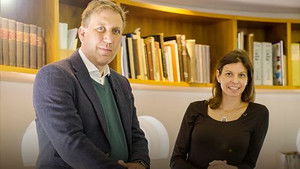
The Astronomer Royal at 80
S66 E4
The Sun
S1 E7
Episode 3
S1 E3
Britain's First Planetarium
S1 E8
No reviews yet
Sign in to write the first review
Patrick Moore tells you what to look for in the night sky during the coming month. The first of a regular monthly series.
Patrick Moore shows what to look for in the night sky during the coming month.
Patrick Moore shows what to look for in the sky during the coming month.
Patrick Moore shows what to look for in the night sky during the coming month.
Patrick Moore shows what to look for in the night sky during the coming month and discusses telescopes with Henry Wildey.
Patrick Moore shows what to look for in the sky during the coming month and talks to Clive Hare, the boy who first saw the New Comet in England.
Patrick Moore shows what to look for in the sky during the coming month and talks about the Sun to Colin Ronan, F.R.A.S.
Patrick Moore shows what to look for in the sky during the coming month and gives, with Reginald Edds and A. H. Degenhardt, a preview of Britain's first Planetarium.
Patrick Moore shows what to look for in the sky during the coming month.
Patrick Moore shows you the wonders of the winter sky during the coming month.
Patrick Moore discusses with Dr. Roger Jennison of Jodrell Bank how radio astronomy is increasing our knowledge of the Universe.
Patrick Moore discusses the most famous of all the constellations.
Patrick Moore talks about the forthcoming penumbral eclipse of the Moon, and Mercury the nearest planet to the Sun.
Tonight Patrick Moore is at the Hampstead Observatory. If weather conditions are suitable television cameras will bring live pictures of the moon's surface.
Patrick Moore talks about the largest planet, its family of moons, and its mysterious changing red spot.
Patrick Moore talks about the life history of a star.
Patrick Moore explains what it would mean to astronomers if a successful attempt were made to reach the moon.
Patrick Moore talks about old and new telescopes with A. H. Degenhardt, and shows some of the things which the new telescopes can reveal-for instance, about the Andromeda Galaxy, whose light takes nea…
Patrick Moore talks to America's foremost astronomer, Dr. Harlow Shapley, about his theories on the size and scale of the universe.
Mars is better seen now than it will be for the next ten years.
Patrick Moore and Dr. Gilbert Fielder discuss the recent report by a Russian astronomer of an eruption on the moon, and what it reveals about the moon's origin and present state.
Patrick Moore describes the life-cycle of a star and compares the Sun's history with that of Betelgeuse, the vast red giant now visible in Orion.
Patrick Moore describes the life-cycle of a star and compares the Sun's history with that of Betelgeuse, the vast red giant now visible in Orion.
Patrick Moore talks about the forthcoming partial eclipse of the Moon and about the planet Mercury, which is at its most visible period for some time.
Patrick Moore and Roger Griffin talk about these pairs of suns revolving round each other, and how they help astronomers to measure the masses of the stars.
Patrick Moore discusses with Dr Harlow Shapley, former Director of Harvard College Observatory and one of the world's leading astronomers, our island of stars in the Universe, of which the solar syste…
Patrick Moore talks about some of the lesser known bodies of the Solar System.
Patrick Moore discusses with F. L. Jackson, F.R.A.S., the theory that the planet Venus is covered with a shallow ocean, which might possibly contain single-celled creatures of a primeval type.
Patrick Moore discusses with Colin Ronan the Northern Lights and other similar natural phenomena.
Patrick Moore talks about the planet Saturn, which may now be seen low in the south, looking like a fairly bright yellowish star. With its rings of satellites and its retinue of moons, it is one of th…
Patrick Moore introduces George Alcock who recently discovered two new planets. He also speaks about the eclipse of the sun which is visible here next Friday.
Patrick Moore talks with Colin Ronan about what is known of the hidden side of the moon, and about the Russian satellite Lunik III, its path through space, its looping of the moon, and the possible in…
Patrick Moore talks about double stars.
Patrick Moore gives an astronomer's view of the Star of Bethlehem which is described in Chapter 2 of the Gospel according to St. Matthew.
Patrick Moore talks about the Andromeda nebula, the most distant object in the heavens it is possible to see with the naked eye, and compares it with what is known of our own galaxy.
Patrick Moore talks about the remote and slow-moving planet which was discovered in 1781. Uranus is sixty-four times as large as the earth, and has 65,000 days in its year, which is eighty-four times …
Patrick Moore explains how the atmosphere interferes with the astronomer's work. He discusses with Dr. Hugh Butler of the Royal Observatory, Edinburgh, how a satellite could be an astronomical observa…
The new comet, Burnham's, is now moving steadily closer to the earth, and should be clearly seen in late April. It will then be in the Northern part of the sky not far from the Pole Star. Patrick Moo…
Patrick Moore talks about the centre of our galaxy, which is so obscured by clouds of dust, gas, and interstellar haze that only radio waves come through with evidence of what lies beyond.
Patrick Moore talks about the moons of other planets in the solar system. Some planets have more than one moon and they range in size from tiny globes, twelve miles across, to giants twice as heavy as…
August is one of the best times of the year to observe shooting stars. Patrick Moore talks about meteors and meteorites, and what we know about these sudden arrivals from outside the Earth's atmospher…
Patrick Moore talks to Sir Harold Spencer Jones F.R.S. The former Astronomer Royal about measuring distances which are literally astronomical. The greatest distance ever measured is that of a recentl…
Soon the Russians and Americans should be able to land instruments on the surface of the moon. Patrick Moore discusses with Gilbert Fielder, the Director of the Lunar Section of the British Astronomi…
Patrick Moore describes how the modern spectroscope has enabled astronomers to find out what different stars are made of and how bright they actually are.
Patrick Moore talks about his recent visit to Russia and some of the principal observatories there.
These are strange glassy objects of unknown origin which are found on the surface of certain parts of the world. Patrick Moore discusses with Dr. M. H. Hey, of the Department of Mineralogy, British Mu…
Patrick Moore talks with W.M. Baxter, Secretary of the British Astronomical Association, about the mysterious dark areas, many thousands of miles across, on the sun's surface, known as sunspots. Besi…
In this programme, postponed from February, Patrick Moore discusses with Dr. F. L. Jackson, of King's College Hospital Pathology Department, the results of certain experiments carried out specially on…
Following last month's programme on the possibility of life existing on Mars, Patrick Moore discusses whether very low forms of life may be found on the Moon, our nearest neighbour in space and the on…
As the Russian space probe approaches Venus, Patrick Moore discusses the little we know about this planet and what sort of world further exploration might reveal it to be.
Frank Hyde has built and operated his own radio telescope at Clacton in Essex. Patrick Moore discusses with him the contributions an amateur can make in this latest field of astronomy.
Patrick Moore discusses meteors and meteorites with Dr. M. H. Hey of the British Museum of Natural History, and the latest versions of the suggestion that some may contain organic compounds.
To celebrate the fiftieth edition of "The Sky at Night", Patrick Moore looks around the night sky through George Hole's 24-inch telescope at Patcham and the 36-inch telescope at the Royal Observatory,…
Patrick Moore discusses with Dr. H. E. Butler how artificial satellites outside the earth's atmosphere can help astronomers, and what further discoveries they may lead to.
From time to time it has been suggested that the Earth may have more than one natural moon. Any such satellite would be very small and faint; but searches for them have been carried out, and recently …
Patrick Moore talks about star clusters and asks viewers to help find out how many stars in the Pleiades are visible without a telescope.
Patrick Moore describes how to set up a small home telescope, powerful enough for real astronomical use, and discusses with L. Marsland Gander the best way to use it. He also gives the result of viewe…
Patrick Moore discusses with Gilbert Fielder the age-old problem of what caused the craters on the moon, and whether the next Russian lunik may solve the problem.
Patrick Moore discusses with Dr. Francis Jackson bacteriologist of King's College Hospital reports that signs of past life have been found in meteorites They also report on the latest progress of the …
Pluto, on the boundary of the solar system, is the planet most remote from the earth. Patrick Moore discusses this strange small world whose mysteries have puzzled astronomers ever since its discovery…
The recent United States attempt to put millions of fine copper wires into orbit round the earth for communication purposes has aroused fierce objections from some astronomers. Patrick Moore discusse…
Is space empty? Astronomers used to think so, but nowadays it is believed there is matter spread out between the stars so that we look out through a sort of cosmic fog. Patrick Moore talks about what…
Every year many people watch the midsummer sun rise over the avenue at Stonehenge. Patrick Moore discusses how much the ancient peoples knew of astronomy and how far the old Stone Circles of Britain w…
From the control point of Frank Hyde's amateur radio astronomy station at St. Osyth in Essex, Patrick Moore discusses with Frank Hyde his work there, especially on the problem of whether the planet Ju…
With the help of a camera attached to the twenty-four-inch telescope in George Hole's back garden at Patcham, Patrick Moore brings viewers pictures directly from the sky and discusses with Dr. A. F. O…
The first interplanetary rockets could carry with them bacteria from earth which might contaminate other planets. Returning spacemen might bring back new and dangerous bacteria which could endanger ou…
Algol, now visible in the evening sky, was called 'The Demon Star' in ancient times. Certainly it is a most unusual star; periodically it seems to 'wink'. Patrick Moore discusses Algol, and explains i…
The American spacecraft Mariner II should be at its nearest to Venus on about December 14. Patrick Moore discusses with Howard Miles, Director of the Artificial Satellite Section of the British Astron…
This year is the bicentenary of the death of James Bradley, third Astronomer Royal. Patrick Moore and Colin Ronan discuss his work and observations, remarkable for his time, which first proved the ea…
1963 promises to be an exciting year for astronomy and space exploration. Patrick Moore forecasts some of the possible highlights.
A Russian astronomer has suggested that the two moons of Mars might be artificial space stations. Patrick Moore discusses the peculiarities of the Red Planet's satellites and considers whether they m…
Patrick Moore and Howard Miles Director of the Artificial Satellite Section of the British Astronomical Association discuss the American space probe Mariner II and its remarkable new findings about th…
Patrick Moore talks about the exploding star or nova in the constellation of Hercules which was recently discovered by an amateur astronomer in Sweden, and discusses the sequence of events which leads…
Patrick Moore discusses with Anthony Michaelis how over the years many writers' fantasies, like Bishop Godwin's voyage to the Moon of A.D. 1657, are now becoming reality, and whether other favourite t…
American astronomers have just reported the discovery of a planet moving round a near star. It is now believed that similar planet families must be common in space. Patrick Moore discusses the latest…
It used to be thought that the moon had been a dead world for millions of years. Now Russian observers have reported traces of volcanic activity in two craters. Patrick Moore discusses the evidence w…
Patrick Moore and Professor C. W. Allen of London University show and discuss a remarkable film of the sun.
Patrick Moore discusses with Arthur C. Clarke, one of the pioneer thinkers of space exploration, how his ideas have developed as he has seen the reality happen, and in particular what will be the prob…
Following the re-measurement of the distance to the nearest star system-the Andromeda Galaxy-as 2.2 million light years, Patrick Moore discusses with Henry Brinton how these enormous distances are cal…
Patrick Moore discusses the recent unusual happenings observed in the surface markings of the giant planet Jupiter.
The stars have always compelled men's attention. Patrick Moore and Colin Ronan discuss some of the extraordinary legends attached to them in the past.
Patrick Moore talks about some of the strange celestial objects, like the planet Vulcan, which have been reported at times but do not in fact seem to exist.
Frank Hyde discusses with Patrick Moore the progress of his radio-astronomy station's observations in collaboration with Florida State University to try to determine whether the radio emissions from J…
The recent flight of Ranger VI came near to solving the age-old problem of the nature of the Moon's surface. Patrick Moore reports on the present situation and its significance to astronomers.
For ages man has used the stars to navigate by Patrick Moore discusses with Henry Brinton some of the new problems of celestial navigation which the space traveller has to face.
The Armagh Observatory in Northern Ireland is the oldest observatory still in use in the Commonwealth. Yet the work being done there on the structure of galaxies is in the forefront of contemporary re…
Patrick Moore reports on the New York International Symposium on the Structure of the Moon's Surface, at which he himself read one of the technical papers.
The accurate astronomical alignment of Stonehenge, notorious on Midsummer Day, contrasts with ancient Egyptian theories that the sun and planets revolved round the earth. Patrick Moore and Henry Brin…
Quasi stellar objects, quasars for short, is the description given to a recently discovered and puzzling new kind of body in the universe. Patrick Moore discusses with Colin Ronan these very remote a…
Commenting on reported changes in the yellow colouring of the planet Saturn, Patrick Moore discusses the colours a telescope reveals in the night sky.
The minor planet Vesta is now visible in the evening sky. Patrick Moore talks about the swarm of dwarf worlds in the solar system which may be the remains of an old planet which met with disaster.
Patrick Moore and Henry Brinton discuss the current scientific evidence as to when the earth came into existence as a separate body in the solar system.
Patrick Moore discusses the atmospheres of the other planets in the solar system, how much is known of them, what more is likely to be found out about them in the near future, and whether one day man …
The advantages, drawbacks, and achievements of using balloons to take astronomical instruments above the earth's atmosphere are discussed by Patrick Moore and Kenneth Fea of the Space Research Group, …
Patrick Moore discusses what information the photographs taken by Ranger 8 may give on the controversial question of the nature of the moon's surface.
Patrick Moore examines the ancient mythology of the stars and some of the ways in which they have been said to influence man's destiny on earth.
Patrick Moore and Henry Brinton discuss how much useful observation can be done without using optical instruments.
Recent studies suggest that the day on Mercury may be two months long. Patrick Moore discusses how this affects our ideas of conditions on Mercury, and how its length of day compares with that of othe…
Space was once thought to be empty, but recent planetary probes - such as Mariner IV now approaching Mars - have shown that it is anything but so. There is plenty of weather in space, though it is not…
In the 100th edition of Sky at Night, Patrick Moore considers one of the most intriguing problems of modern astronomy: could conditions for life as we know it exist outside the solar system, would it …
Patrick Moore discusses the information sent back by Mariner IV and what new ideas it gives us about the planet Mars.
Patrick Moore reports on Quasars. These recently discovered objects, immensely distant sources of vast amounts of energy, are causing astronomers to reconsider their previous ideas of the nature of t…
Patrick Moore looks at the new Isaac Newton telescope which will be the largest in Europe. What will it achieve?
In the past few months views about the nature and origin of the Universe have been changing considerably. Patrick Moore discusses some of the current thinking on this vast subject.
Recent Russian studies have suggested that there may be another major planet in the solar system. Patrick Moore discusses the evidence for the existence of a world even more distant than Pluto.
Patrick Moore discusses with Frank Hyde whether the radio emissions from Jupiter, which have been puzzling many astronomers, can be related to the movements of Jupiter's moons.
On Christmas Eve the first meteorite to fall on British soil for many years exploded over the village of Barwell in Leicestershire. Patrick Moore discusses with experts and eye-witnesses its possible …
The recent successful landing of the Russian space probe Luna-9 on the moon has brought nearer the possibility of a manned landing there. Patrick Moore discusses the latest information, and speculate…
Is Astronomy a good basis for further education? Patrick Moore discusses with Professor A J. E. Ingram and Dr. R. C Maddison the Keele University practice of introducing all first-year students to as…
On May 20 there will be a partial eclipse of the sun, visible from Great Britain. Patrick Moore talks about eclipses and explains what will be seen on that day.
Since Greenwich Observatory was founded in 1675 there have been eleven Astronomers Royal. Sir Richard Woolley, the present one, talks about the sometimes brilliant, sometimes eccentric characters of …
Patrick Moore discusses with Barbara Middlehurst of the University of Arizona Observatory and lunar observer Peter Sartory a new theory of how the effect of the earth's pull on the crust of the moon m…
Sundials were one of the earliest instruments used to study the earth's movements. Patrick Moore discusses with Henry Brinton, and with Sir Alan Herbert who makes his own, the use of sundials in moder…
Patrick Moore talks to Professor P. A. Wayman, Director of Dunsink Observatory about the remote star-systems which have been found to be galaxies of immense size-many of them racing away from us at th…
Saturn is the lovely Ringed Planet - but this year the rings are not properly visible. Patrick Moore explains this unusual appearance of Saturn, and why astronomers find it so interesting.
The Leonid shooting-stars may make a really brilliant display this month. Patrick Moore and N. B. Ridley talk about this interesting meteor shower, and ask for help from viewers in observing the Leoni…
1966 is near its end. Millions more years are to come, but the earth will not last for ever. Patrick Moore discusses some of the ways in which our world will eventually come to an end.
At present the most brilliant object in the evening sky is Jupiter, giant planet of the Solar System - an immense world with cloud belts, the fascinating Great Red Spot. and four bright moons. Even a …
Well over a thousand artificial satellites are now in orbit round the earth, and some can be seen as bright lights crossing the stars. Patrick Moore talks to Desmond King-Hele, F.R.S. about the way a…
Patrick Moore and Dr. V. Barocas talk about the nebulae - clouds of gas of many kinds far out in space. In some of these, new stars are coming into existence.
Close-up photographs of prospective lunar landing-sites are rapidly increasing our knowledge of the moon's surface. But how strong is the evidence that the lunar craters were formed by the same kind o…
On the programme's tenth anniversary, Patrick Moore describes the enormous advances made in astronomical studies during the space-decade since April 1957. He shows highlights from past programmes, inc…
Since the American rocket Mariner IV went close to Mars to send back information, our ideas about the Red Planet have changed very much. Patrick Moore discusses these new ideas with Harold Ridley and…
Vega, one of the brightest stars in the sky, is now almost overhead during the evening. It is a magnificent blue star, much hotter than the sun. Patrick Moore and Dr. V. Barocas talk about Vega, and …
From 1845 until 1917 the biggest telescope in the world was the 72-inch reflector built and operated by Lord Rosse at his Irish home. Patrick Moore visits Birr Castle in County Offaly, Eire, to discu…
Patrick Moore talks about Novae, which appear to be new stars but are in fact existing ones brightened by explosions, and discusses the new Nova near the Constellation of Delphinus with George Alcock,…
Patrick Moore and Colin Ronan discuss the increasing study of non-visible radiations from space which is dramatically widening our knowledge of the universe.
In the just-completed NASA Lunar Orbiter programme, five photo-laboratories have orbited the moon at 4,500 m.p.h. Patrick Moore talks to H. J. P. Arnold about the sophisticated techniques involved in…
The Russian probe Venus 4 has landed on its target. Patrick Moore talks about the mysterious earth's twin' planet, and puts questions about the new information from Venus to Colonel Valery Bykovsky, …
Meteorites are the only solid objects from outer space which land on earth. Two thousand have been found, the biggest weighing sixty tons. What are they, and where do they come from? Patrick Moore di…
The enthusiasm of astronomers makes them build observatories at their own homes. Tonight Patrick Moore looks at three home-built observatories, including his own, which he has successfully transferre…
Leap Year makes this a special month-but variations in earthly calendars are slight compared with those in other worlds. In tonight's programme, Patrick Moore talks about Uranus's 65,000-day year, Ju…
The Armagh Planetarium-the first big public planetarium to be built in Britain outside the London area-was opened to visitors on February 5. Its Director, Patrick Moore, shows viewers round and descri…
Patrick Moore discusses with Iain Nicolson the sooty clouds in space which hide some stars and themselves shine in the light from others.
Patrick Moore discusses with Michael Bentine the problems of manned flight beyond the Moon to the planets and stars. They examine the techniques devised in fiction and in fact to solve some of these p…
In three weeks' time the asteroid Icarus, first seen in 1949, orbits close to the Earth. Patrick Moore talks to Dr. Vinicio Barocas about the nature and movements of the asteroids.
Sunspots, or 'storms' on the sun's surface, appear in maximum numbers about every eleven years; and large numbers are expected this year. Patrick Moore discusses with William Baxter the significance …
Strange, quickly vibrating radio sources have been discovered far out in space. These pulsating stars or 'pulsars' are one of the most exciting discoveries of modern science, and have taken astronomer…
Within a few months from now, man may land on the moon. Patrick Moore discusses with a geologist, Dr. Peter Cattermole, the conditions the first lunar astronauts are likely to find.
On September 22 a total eclipse of the sun will be visible in Russia. Patrick Moore explains why eclipses are scientifically important and what people in Britain will see.
Patrick Moore shows film and gives a first-hand description of the recent total eclipse of the sun he saw in Siberia, and discusses its scientific significance with another British astronomer who was …
Radio-astronomers at Jodrell Bank are carrying out a series of remarkable experiments to measure the distance from earth of 'pulsars'-the mysterious regularly-ticking radio sources out in space which …
The planet Venus is like the earth in size, yet totally unlike it - as recent American and Russian probes have shown - in being an inferno of heat and clouds. Patrick Moore explains why modern resear…
Is it unlucky to see the new moon through glass? The moon has always been thought to have a powerful influence on the earth, causing not only tides but good luck, bad luck, and even lunacy, according …
Man has just taken his first close look at the moon, and in a few months American spacecraft are expected to bring back samples of the moon's crust for analysis. At this turning point in lunar resear…
Without a telescope can you see the phases of Venus? The little star Alcor? The Great Nebula in Andromeda? Patrick Moore discusses what can or cannot be seen without telescopes and invites viewers to…
Jupiter is specially brilliant this month, but it is so remote that many of its mysteries are still unsolved. Patrick Moore discusses them with Terence Moseley Two bright planets are in the evening …
Is it unlucky to see the new moon through glass? The moon has always been thought to have a powerful influence on the earth, causing not only tides but also good luck, bad luck, and even lunacy, accor…
Two American spacecraft will fly past the planet Mars this summer and send back information which may help to answer the long-debated question, 'Is there life on Mars?' Patrick Moore discusses the la…
Unique scientific observations are made on the rare occasions when Venus 'transits' - or crosses - the sun. Tonight's programme marks the bicentenary of Captain Cook's voyage to the South Pacific to o…
Meteors and meteorites travel around space in their millions. A few reach the earth but most are burnt up in our atmosphere. Astronauts in space suits, moon bases and manned satellites will be unprote…
Does it ever rain on Mars? Are there clouds, winds, and storms? The Mariner probes have sent back new, fascinating information about the Red Planet, but even now there are many problems to be solved. …
It is now over fifty years since Einstein astounded the worlds scientists with his revolutionary theories of Relativity. Patrick Moore discusses with Professor Samuel Tolansky the application of Einst…
Most stars remain unchanging over huge periods of time; but some continually vary in brightness. Only long observation can reveal their secrets, and much of this patient work is done by amateurs. Pat…
Patrick Moore describes The Moons of Saturn. Why are Saturn's 10 satellites so different from each other? Why does one of them orbit in the opposite direction from the others, and another appear brig…
In the late 1970s a spacecraft may be sent on a 'tour' of four of the outer planets - Jupiter, Saturn, Uranus, and Neptune - using the gravity and orbital speed of each to boost it on to the next, and…
'I believe 1969 may turn out the most famous year in all history.' So says Patrick Moore who, this afternoon, surveys the space highlights and astronomical achievements of 1969. He shows unique film …
In January a comet will be visible in the northern sky, bright enough to be seen without a telescope. Patrick Moore talks about comets and their appearances with an observer, Keith Hindley, and about …
The constellation of Orion the Hunter is conspicuous in the southern sky. Patrick Moore talks about its many fascinating features, among them white giant stars, the old red giant Betelgeuse, and the g…
In the year 1054 a new star, or Supernova, appeared. It was a star so brilliant that it rivalled Venus and was said to be visible in daylight. It was two years before it faded away. Modern astronomers…
The Apollo 11 and 12 astronauts brought back colour photographs which have given valuable information about the moon's surface and geology. Soon the Apollo 13 crew will be photographing the rugged upl…
On 9 May the tiny planet Mercury will be seen as a black dot in transit across the sun's disc. Because it orbits close to the sun, Mercury has always been difficult to observe, and astronomers can on…
Patrick Moore examines the telescopes at Frank Acfield's back-garden observatory in Newcastle. Amateur astronomers - whether they have sophisticated equipment or simply use small telescopes or binocul…
Patrick Moore examines some instruments used by ancient mariners to steer their ships by the stars, and discusses with James Burke the use of the stars by American astronauts and scientists to navigat…
The two tiny Moons of Mars, Phobos and Deimos, are unlike any other astronomical bodies known to us. Too small to be satellites like our Moon - are they asteroids or minor planets? Patrick Moore exam…
Patrick Moore talks to some of the world's leading astronomers, who are attending an international conference at Brighton, about the spectacular growth in recent years of our knowledge of the universe…
The devastating results of earthquakes are well known, but recent observations have shown that the moon too has moon-quakes, and they are linked with the tidal effects of the earth on the moon. Patri…
Spacecraft have already been to the nearest planets, Mars and Venus. Within the next 10 years other probes will explore much further, heading inward to Mercury, and outward beyond Jupiter-perhaps even…
One of the newest and most exciting branches of science, infra-red astronomy can detect 'invisible light' from the stars and so tell us more than we could find out from visible light only. Patrick Mo…
Astronomers now think there must be planets circling many of the stars in the Universe, and that some of these planets could well be inhabited. Patrick Moore talks to Dr Peter van de Kamp, who has al…
Mars has now started to approach the Earth. Later in 1971 it will be as close to us as it can ever come. More Mariner spacecraft will be sent there, and Patrick Moore looks ahead to see what new infor…
Our view of the Universe is always out of date! We see the Moon as it was over a second ago, the Sun 81 minutes ago, and remote star systems as they used to be before the Earth was formed. Patrick Mo…
Patrick Moore and Dr Vinicio Barocas discuss this star and its strange companion, a body so dense that one thimbleful of its material would weigh a ton.
Patrick Moore discusses with Professor Samuel Tolansky a startling new theory about an 'invisible' star in the two-star system Epsilon Aurigae. Could this mysterious object be, not an ordinary star a…
Only two planets are known to have magnetic fields: the Earth itself, and Jupiter the huge cold outer planet full of mysteries which have puzzled astronomers for centuries. Patrick Moore discusses wi…
The Russian Soyuz flights and America's planned launching of a manned Skylab in 1973 are steps towards the establishment by the 1980s of permanent observatories outside earth's atmosphere. As well as …
A telescope must be moved continuously to follow the stars. Patrick Moore uses his own telescopes to show how this is achieved, and visits the observatories of Henry Brinton and Cmdr Henry Hatfield, …
The nearest star - not counting our own sun, which is a star - is 25 million million miles from us. Patrick Moore uses a school cricket-pitch to show how the distances of the stars have been worked ou…
Mars is at its closest to earth since 1956, and American and Russian probes are on their way to map it and send back scientific information. Patrick Moore discusses with Dr Geoffrey Eglinton the ambi…
Stars look like simple points of light to the naked eye, but they have complicated lives, evolving from dust and gas and eventually ageing into dense 'white dwarfs.' Patrick Moore discusses the stages…
The mathematician and astronomer Johann Kepler was born in 1571. Tonight Patrick Moore discusses with Colin Ronan the importance of Kepler's discoveries.
Three spacecraft should reach the red planet this month, the Russian Mars 2 and Mars 3 and the American Mariner 9. Patrick Moore shows the latest photographs from Mariner, and discusses these with Ar…
A historic telescope recently returned from Herstmonceux to its original home on the roof of the old Royal Observatory, Greenwich. Patrick Moore talked to the Astronomer Royal, Sir Richard Woolley, ab…
The Great Bear is the most familiar and conspicuous star-pattern in the night sky all the year round: but it is not exactly what it seems. Patrick Moore explains that, although its seven stars look c…
The first X-ray source far out in space was detected nine years ago. Since then, 100 more have been found. But what are they? Patrick Moore talks to Professor Peter Willmore and Dr Kenneth Pounds abo…
Mars could have water and life. This is the astonishing information now coming back from the Mariner 9 orbiting probe. Patrick Moore discusses the evidence in the latest photographs with a geologist,…
What is a neutron star? a quasar? a pulsar? a black hole in space? Patrick Moore answers your questions.
The Sky at Night with Patrick Moore started on 24 April 1957. In tonight's special edition, Patrick Moore looks back, with Commander Henry Hatfield, at the astonishing changes and advances in astronom…
Patrick Moore explains why Planet X has been so difficult to detect, and what kind of place this dim, cold world at the limits of our solar system would be.
How much did our prehistoric ancestors know about the movements of the sun and moon? Patrick Moore is at Stonehenge to watch the midsummer sun rise over the Heel Stone, and to discuss with Professor …
An unmanned spacecraft, Pioneer F, is on its way to Jupiter, the largest planet in our system and one of the most mysterious. Patrick Moore explains why Jupiter puzzles astronomers, and what sort of p…
The Great Spiral in Andromeda is one of the most spectacular objects known to astronomers. Patrick Moore describes our nearest galactic neighbour and other galaxies in our 'local group.'
There may once have been in the solar system an extra planet, destroyed in the remote past and producing the fragments we now know as asteroids. Patrick Moore talks about the 'missing' planet and its…
New information about Mars is being received from the American space-probe Mariner 9. Patrick Moore and Arthur Cross talk about what this means, and show some of the new charts of the crater-scarred M…
Are there such things as 'black holes in space' - old stars which have collapsed in on themselves and lost their light? Patrick Moore discusses with Professor Samuel Tolansky, FRS, the possible exist…
Four hundred years ago this month, the famous astronomer Tycho Brahe saw a brilliant new star blaze overhead near the 'W' of Cassiopeia. This was a supernova, one of only three in recorded history. Pa…
Patrick Moore looks forward to a year of spectacular astronomical events: the launching of the Sky-lab earth-orbiting laboratory in May; the longest eclipse of the century in June; the first dual-plan…
From his Selsey observatory, Patrick Moore illustrates what amateur astronomers can achieve, and shows the planet Saturn.
Patrick Moore talks about Sirius the Dog-Star, the brightest star in the sky and one of the nearest to us, and about its white dwarf companion Sirius B. (Patrick Moore's new opera Perseus discussed i…
The longest solar eclipse of the century, lasting over seven minutes, will take place in Africa on 30 June. Patrick Moore talks about some of the exciting experiments which will be carried out by sol…
Patrick Moore discusses with Gordon Taylor and Dr David Allen new ways of measuring objects in our solar system.
Ancient astronomers described Sirius the Dog-Star as red: but what colour is it today? A few weeks ago, Patrick Moore asked viewers to tell him what colour they see Sirius, and now he analyses the th…
British observers back from the longest solar eclipse of the century tell Patrick Moore about the results of their experiments. These astronomers went to see totality from widely different viewpoints …
Until the invention of modern techniques like radar and satellite-guidance, a ship at sea could only find her position by sun and stars. On board ship, Patrick Moore and Cmdr Henry Hatfield, RN, discu…
Venus has always been a mysterious planet - shrouded in its dense, fiercely hot atmosphere, in which life as we know it could never exist. Astronomers have just announced a startling discovery: using …
How big do you see the full moon? Near the horizon, it appears larger than when it is high in the sky - but this is not due to magnification by the earth's atmosphere. Patrick Moore discusses this wit…
Patrick Moore visits the volcanic crater at Mount Teide in Tenerife, and discusses with Dr Ron Maddison the characteristics of Martian volcanoes, compared with those on the earth and moon.
On the morning of 10 November the planet Mercury will pass in transit across the face of the Sun. Patrick Moore tells observers what they can expect to see, and he looks forward to the launching in 19…
This month for the first time a space probe passes close to one of the giants of the solar system - the planet Jupiter. The American craft Pioneer 10 has penetrated further into the solar system than …
Patrick Moore talks about what is on view in the night sky now, and discusses with Gilbert Satter thwaite the important subject of positional astronomy - the exact measurements and movements of celest…
Saturn is now very well placed in the evening sky, and a small telescope will show its ring system as well as some of the moons. Patrick Moore and Dr Garry Hunt examine the recent results showing tha…
The Milky Way, made up of countless faint stars, can easily be seen in the evening sky this month. Tonight Patrick Moore describes this luminous band which stretches from one horizon to the other, an…
How strong is the possibility of life existing in other worlds in our galaxy and elsewhere in the universe, and if it does, where is the nearest life likely to be and how could we communicate with it?…
The Sun is the only star near enough for us to study in detail. Patrick Moore discusses with Dr Ron Maddison the mysterious cycles of activity which cause spots and vast looped prominences to appear o…
Patrick Moore describes the Red Giant star, Antares, in the constellation of Scorpio. It is now visible above the southern horizon; and although it looks like a dot, it is bigger than the orbit of the…
At this time of the year shooting stars can be seen in profusion, for we are in the middle of the year's richest meteor-shower - The Perseids. Tonight Patrick Moore discusses these spectacular object…
What can you see in the night sky with binoculars, or with a small telescope - and how much money must you spend if you need adequate equipment for 'the amateur astronomer'? Patrick Moore shows examp…
A century ago, the most powerful telescope in the world was the great 72-inch reflector at Birr Castle in Eire, with which its builder, the 3rd Earl of Rosse, discovered the spiral galaxies. Patrick M…
Has gravity always been the same? There have been suggestions that the force of gravity today is weaker than it used to be. Patrick Moore and Colin Ronan discuss this fascinating theory and try to dec…
This winter the minor planet Eros is due to approach the Earth as closely as it will ever do. Patrick Moore talks with Gordon Taylor of the Royal Greenwich Observatory.
During 1974 there have been some important and spectacular space missions. In the spring Mariner 10 sent back the first close-range pictures of cloud-covered Venus and crater-scarred Mercury. Then, ea…
Patrick Moore talks about this most splendid of constellations.
Patrick Moore discusses plans for the new Northern Hemisphere laboratory with Dr Graham Smith , director-designate of the Royal Greenwich Observatory.
Algol, the Demon Star, is now well on view during the evening. Every two-and-a-half days the star seems to give a long, slow ' wink.' Patrick Moore describes this remarkable eclipsing binary and expla…
Astronomy of the infra-red is now vitally important in studies of the planets, the stars and the universe as a whole. Patrick Moore talks about infra-red astronomy to Professor Jim Ring, of Imperial …
This month the three outermost planets - Uranus, Neptune and Pluto - are all on view, even though they are faint. Each has its own special points of interest; and Patrick Moore talks about these remot…
A strange force of X-rays from the sky has been discovered by instruments on board the British satellite Ariel-5. What is the object sending them out?
What is the sun made of? To study the nature of the sun, special equipment is needed. At Sevenoaks Commander Henry Hatfield has built one of the very few spectrohelioscopes outside professional obser…
Six years ago, in July 1969, the first man landed on the moon. At a major international conference held in London last month, experts from all over the world met to discuss the results of their work o…
Jupiter's four largest moons - the Galilean satellites - are among the most interesting members of the Solar System. They were discovered by Galileo in 1610 - hence their nickname - and they have been…
How did the Universe come into being? This is one of the most important and most puzzling problems facing mankind. Recently we have some new information from the depths of space, which may shed some l…
We have just seen the brightest nova, or exploding star, for many years - Nova Cygni , which blazed out in the constellation of the Swan and became very bright. Patrick Moore talks about this strange …
On 22 October the Russians landed a space-probe on the planet Venus and sent back pictures of the surface which have taken astronomers completely by surprise. Venus has been called the planet of myste…
Is Earth the only inhabited world, or is our civilisation one of many? Patrick Moore looks at some of the stars which could be the centres of planetary systems, and speculates as to which of them coul…
The planet Mars is brilliantly visible in the sky at the moment. It has always been regarded as the one planet beyond earth upon which life might exist, and in 1976 we could find out at last. Two Amer…
Everyone has heard of the Pole Star - but how many people can find it, or know its importance? From his observatory at Selsey, Patrick Moore talks about this huge, remote sun which has served to guide…
What is a Black Hole? Nobody can yet be sure; it may be the final state of a very massive star which has collapsed, surrounding itself with a ' forbidden zone' from which not even light can escape. Pa…
The rings, easily visible with a small telescope, are now better displayed than they will be for some years to come. Patrick Moore talks about Saturn and describes what the American spacecraft Pioneer…
The Sun sends us its light and heat, but it has many other effects on the earth too. It raises tides; it produces the lovely Polar lights; it has long-term effects on plant growth - and its variations…
Pulsars are among the most incredible objects known to man. They are composed of neutrons and are so dense that a pin's head of neutron star material would weigh as much as an ocean liner. Discovered …
Patrick Moore discusses the results of this historic mission with two leading experts Professor Geoffrey Eglinton and Dr Garry Hunt.
The first spacecraft to land successfully on Mars has started its programme of research. America's Viking 1 is now standing on the Martian surface, sending back information direct from that strange, r…
Patrick Moore brings news on the Viking missions to Mars and asks How Far Can You See? With the naked eye one can see 12 million, million, million miles. Patrick Moore talks about these tremendous st…
Mars has been reached. Both Vikings have not only landed successfully but have sent back information which is as exciting as it is unexpected. Now that the first results have been studied, we are able…
For many centuries Greenwich Observatory was the world's leading astronomical establishment, and it marks the 'zero for longitude', dividing the world into two hemispheres. More than 20 years ago, the…
In 1963 astronomers identified ' quasars ' - star-like objects which were held to be the most remote and the most luminous ever seen. There have been doubts about the accuracy of these estimates, but …
This winter Venus is a brilliant object in the evening sky. It is very like the Earth in size and mass, and until the Space Age it was thought to be capable of supporting life in some form. Nowadays w…
Sirius is now at its best in the evening sky. It is one of our nearest stellar neighbours, and is much more luminous than the sun. It seems to flash all colours but is really a white star, it has a st…
How big is the universe - and does it have a boundary? Distances on the astronomer's scale are very hard to appreciate. Patrick Moore and Dr Ron Maddison discuss them in this programme, and explain h…
First detailed photographs of Mercury, the innermost planet, were obtained by the American space-probe Mariner 10. Maps of Mercury have been drawn from these photographs by Arthur Cross and in this pr…
In April 1957 The Sky at Night began. It could not have started at a better time; within months the Space Age opened, with the launch of Sputnik 1, and over the next few years astronomy saw some of th…
Sunspots are known to increase and decrease over an 11-year cycle. We have just passed through a period of minimum solar activity and the sun-spots should now be increasing, but are slow to do so. Pat…
For centuries the ringed planet Saturn has been regarded as unique. This year the startling discovery has been reported that Uranus also has a system of rings - though as yet they have not been seen d…
This month an important new British telescope has been completed. It is destined to be set up in Hawaii, and it is not an ordinary telescope; it is designed to study infra-red radiation from space, wh…
Cygnus, the Swan, is one of the most beautiful of the constellations, and it contains some spectacular objects, including the very luminous Deneb - a star at least 10,000 times more powerful than the…
The two Voyager probes to the outer planets are probably the most ambitious of all automatic space-craft launched up to the present time. They should send back important new information about Jupiter,…
How many people living in Britain have seen the Southern Cross? It never rises over Europe, but it is a familiar sight to those who live in the Southern Hemisphere. The stars of the far south are inde…
Astronomy is still one of the few sciences in which the amateur can play a useful part. Paul Doherty , who specialises in planetary observations, is an amateur astronomer who has built his own observa…
All the bright planets are now visible in the early morning sky. Some of them seem to outshine the stars, and yet they have no light of their own. They shine only by reflecting the light of the sun. T…
Ever since the days of Jules Verne and H.G. Wells, science fiction and space exploration have been closely linked, and over the last 100 years science fiction has often become science fact. Rockets to…
Good astronomical telescopes are very expensive today, but there are many objects in the night sky which can be viewed with binoculars. For example, during winter evenings the constellation of Orion i…
What is the most remote object ever visible with the naked eye? The answer is: the Great Spiral in Andromeda, which is a member of our Local Group of galaxies, but is still very remote - its light tak…
The Viking space-probes have been operating on Mars for almost one Martian year (nearly two Earth years). We do not yet know whether life in any form exists there but many scientific discoveries have …
Ever since the days of Jules Verne and H. G. Wells, science fiction and space exploration have been closely linked, and over the last 100 years science fiction has often become science fact. Patrick …
The asteroids or minor planets are among the most interesting of the junior members in the Solar System. Only one - Vesta - is ever visible without a telescope, but thousands are now known to exist; s…
How is a star born? We believe that with our telescopes we can see where fresh stars are being created. In this programme Patrick Moore talks about stellar birth, how a star develops and how every sta…
Far from being exceptional, our earth is an ordinary planet moving around an ordinary star. From space it looks like a coloured globe as men have seen it from the surface of the moon. In this programm…
Gamma ray astronomy is a new science; as yet we do not know as much as we would like about these strange, high penetration rays which come from deep space. Patrick Moore discusses gamma ray research …
The outer planets, Uranus, Neptune and Pluto, are now visible in the evening sky. Do these worlds mark the real edge of the Solar System? There have been suggestions that an undiscovered planet may ex…
What effect does the moon have on the tides? How do I recognise the constellations? What is a shooting star? Is there life on other worlds? If I want to take up astronomy, how should I go about it? T…
The moon has long been regarded as a dead world; but is this completely true? Astronomers have described faint coloured patches and local ' fogs', which are sometimes thought to be gases seeping throu…
According to a new and revolutionary idea life did not originate on Earth but was brought here as organisms from outer space. Patrick Moore talks to Sir Fred Hoyle and Professor Chandra Wickramasingh…
Six thousand light-years away in space lies the Crab Nebula, a patch of spreading gas which is all that is left of a star which was seen to explode in 1054. The most famous of all supernova remnants, …
The two giant planets Jupiter and - Saturn are now visible in the late evening sky. Rocket probes are on their way to both, as the alignment of the outer planets between now and the early 1980s gives …
In December, six American and two Russian space-craft reached Venus. With its dense atmosphere, its searing hot surface and its clouds of deadly sulphuric acid, this strange planet is overwhelmingly h…
All astronomers know of the catalogue of star-clusters and nebulae compiled 200 years ago by Charles Messier ; and ' hunting the M objects' is a favourite amateur pastime. Tonight Patrick Moore descri…
Most scientists believe that intelligent life is common in the Universe. But the creation of life requires special conditions, which could be much less frequent than is usually thought. Patrick Meore …
Is space empty? Astronomers used to think so, but it is now known that there is a tremendous amount of material spread between the stars. Even complex molecules are found there. This discovery has had…
When Voyager 1 flew past Jupiter in March of this year, it sent back results which surprised even the space-planners. The famous Red Spot was shown as a huge whirling storm, while one of the satellite…
'Is it going to rain today?' 'Will it be a sunny weekend? ' The British are famous for discussing the weather. Its vagaries are part of our lives, and we all watch the forecasts. 1957 saw the start…
On 2 June the new all-British satellite, Ariel 6, was put into orbit more than 600 km above the earth's surface. Like its highly successful predecessor, Ariel 5, one of its main tasks will be to study…
Voyager 2, the latest Jupiter probe, made its rendezvous with the Giant Planet on 9 July. Following the outstanding success of its predecessor, Voyager 1, the results were expected to be spectacular. …
Aries, the ram ... Taurus, the bull ... Gemini, the twins ... These are three of the constellations of the Zodiac, the belt stretching round the sky in which the Sun, the Moon and the bright planets a…
The American probe Pioneer II. which by-passed the planet Jupiter in 1974, made the closest approach to Saturn on 1 September 1979. after a journey which has taken it right across the Solar System. Pa…
From the country, the skies are dark and the stars shine out brilliantly, but city-dwellers can never see the stars well. Fortunately the Sun can be studied telescopically, and at present it is at its…
Not all stars are alike: some are red, some yellow and some white. These different colours show their different temperatures, and by using spectroscopes it is possible to find out what materials exist…
Patrick Moore and Michael Bentine discuss UFOs - fact or fantasy? What are the unidentified flying objects which have been so much in the news in recent years? Are they spacecraft from other worlds, a…
How many people know the meaning of terms such as ' right ascension' and ' declination '? And what exactly is the celestial sphere? Mapping the sky presents problems different from those of mapping th…
Saturn is generally regarded as the most beautiful object in the sky, but this year it has an unusual appearance. For the first time since 1966 the rings are edgewise-on to the Earth, and even large …
Exactly 50 years ago, in 1930, the planet Pluto was discovered by a young research student named Clyde Tombaugh. Since that time Pluto has set puzzle after puzzle. It is smaller than expected; it has …
On the summit of Mount Hopkins, in Arizona, is the world's most revolutionary observatory, containing the multiple mirror telescope. Instead of one great mirror, there are six all working together and…
What lies at the centre of our galaxy? Are there masses of brilliant stars, or is there something even more significant, such as a Black Hole which is swallowing up any stars which move too close to i…
The Solar Telescope ' Kitt Peak, in Arizona, is America's national observatory. One of its most important instruments is the ingeniously-designed telescope used for studying the sun. Patrick Moore vis…
What are the quasars, which may be close to the edge of the universe as seen from Earth? Are they made up of exploding stars, or are they the centres of galaxies in which great outbursts have taken pl…
In December 1978 America's Pioneer Venus I reached its target. Since then it has been orbiting Venus, and mapping the planet's surface by means of radar. Venus is not the kind of world it was once bel…
In Northern Arizona there is a vast hole in the desert, almost a mile across and 600 feet deep, known as Meteor Crater. It was blasted out in prehistoric times by a huge iron meteorite, and is the mos…
Patrick Moore , with the aid of a sundial at his Selsey home, explains why equinoxes occur, and shows how the seasons of the year vary, due to the tilt of the Earth's axis. Other planets in the solar …
In the constellation of Aquila, the Eagle, there is a faint star known rather unromantically as SS433. Lately, however, it has proved to be very unusual. Probably the result of a tremendous stellar ex…
After a journey of over three years, Voyager 1 has reached Saturn-800 million miles from Earth. Last year the spacecraft bypassed Jupiter and sent back the most spectacular images ever seen of the pla…
Meteors or shooting stars are familiar objects in the night sky. Several times during the year showers of meteors occur. One of them, known as the Quadrantid shower, will be at its maximum on 3 Januar…
Palomar Patrick Moore visits Mount Palomar in South California to see the great 200-inch telescope, and talks to the scientists who use the largest working telescope in the world.
The Orion nebula is one of the most famous objects in the sky. It is visible with the naked eye as a hazy patch in Orion's sword; small telescopes show it well, but we now know that it is only part of…
Patrick Moore tells the story of William Herschel, the obscure Hanoverian army bandsman whose discovery with a home-made telescope of the planet Uranus doubled the size of the known solar system. Hers…
What can be seen in the night sky this month? Patrick Moore describes the stars which are on view during April; he also shows the latest maps of Saturn's satellites drawn up from Voyager I pictures, …
In the crystal-clear atmosphere of La Palma in the Canary Islands the new Northern Hemisphere Observatory is being built. This observatory, a joint international project, is designed to study galaxies…
Neptune, the outermost of the giant planets, has been known for well over a century, but our knowledge of it is still meagre. With its gaseous surface, its quick rotation and its large satellite, Trit…
What are the chances of the Earth being hit by an asteroid - another and much smaller world orbiting the Sun? Just over 40 years ago the Earth was nearly in collision with an asteroid called Hermes. S…
During summer evenings many interesting constellations are on view. There are also some spectacular double stars, most of them are binary systems in which the components are physically associated. Pat…
Meteors, or shooting stars, space debris shed by comets travelling round the sun, can produce brilliant displays and the Perseids, seen each year between 27 July and 17 August, are unusually spectacul…
On 25 August the American spacecraft Voyager 2 made its pass of Saturn, and told us more about the unexpectedly complicated ring-system, the surface of the Planet, and the puzzling family Of satellite…
Three weeks ago Professor Sir Bernard Lovell retired as Director of the radio astronomy observatory at Jodrell Bank, where the 250-foot 'dish' opened up new methods of studying the universe; its desig…
Pegasus, the flying horse, is the main autumn constellation - but do you know where to find it? Can you see Mars now - and if so. where is it? Where should one look for the Great Spiral in Andromeda, …
For almost 2,000 years, the Star of Bethlehem has been regarded as a major mystery. What was the Star of Bethlehem? Was it the planet Venus, an exploding star, a comet, or a grouping of planets? Patri…
Yesterday evening there was a lunar eclipse. The moon passed fully into the earth's shadow from 7.15 until 8.35 pm and the eclipse should have been seen well from all over Britain and, weather permitt…
Venus has always been a planet of surprises, and very recently the Pioneer spacecraft orbiting the planet have provided some more. There is evidence of current active volcanoes, very similar to those …
Close to the brilliant star Capella, in the constellation of Auriga, there is a particularly interesting star, Epsilon Aurigae. We know it is made up of two stars, but we can only see one directly. Th…
During evenings in April three bright planets-Mars, Jupiter and Saturn - are very conspicuous, with Venus still prominent in the east before dawn. Patrick Moore explains how these planets move, someti…
In this special programme to mark the 25th anniversary of The Sky at Night, Patrick Moore reports on what's happening at great observatories all over the world; he talks to space researchers and 'grou…
Astronomers in Australia have just discovered an object which may be the most remote and luminous known to man. It is a quasar, apparently 13,000 million light years from us. Yet some astronomers have…
La Palma, in the Canary Isles, is a picturesque place. It is also ideal as a site for large telescopes, and it is here that a major observatory is being established. It is linked with the Royal Greenw…
Is there a new planet in the solar system? Many astronomers believe that there is a massive body beyond Neptune, the outermost of the main planets now known: it could be a planet, but it might also be…
Siding Spring Mountain in New South Wales is the site of one of the world's most sophisticated observatories. All the southern sky is available for study, and the AAT, or Anglo-Australian Telescope, h…
Why are some galaxies, such as ours, spiral in form like huge Catherine wheels, and why are stars born inside these arms? Patrick Moore and Dr John Beck -man of Queen Mary College talk about the myste…
Can comets have collided with the earth? According to a new theory by Dr Clube and Dr Napier from the Royal Observatory, Edinburgh, collisions can happen, and it was one such event which wiped out the…
Less than four years after Neil Armstrong made his 'one small step ...', Commander Eugene Cernan became the last man on the moon. In December 1972 when Challenger, the lunar module of Apollo 17, lifte…
The winter stars are more brilliant than those of any other season. Orion dominates the scene, together with his brilliant retinue. Two particularly interesting stars are visible; the Twins, Castor an…
A week ago IRAS, the Infra-red Astronomical Satellite, was launched and is now moving round the Earth at a height of 560 miles. It will provide new information about objects ranging from super-giant s…
Mauna Kea, in the Hawaiian Islands, is almost 14,000 feet high. At its summit the air is thin and the skies are clear-which is why some of the world's largest telescopes have been set up there. Patric…
Patrick Moore talks about a strange pulsar to the Astronomer Royal, Professor Graham Smith.
A mile below the Black Hills of Dakota lies a huge tank of cleaning fluid deep inside a gold mine - the world's strangest observatory. It is designed to collect neutrinos sent out by the sun. But what…
The stars, many far bigger than our ' star the sun, are many millions of miles away and appear only as specks of light. Until recently it had been impossible to see any details of the stars. But thank…
Two rocket probes, Pioneers 10 and 11, are on their way out of the solar system. They are sending back new information about the heliosphere, that part of space in which the influence of the sun is do…
First identified 20 years ago, quasars are probably the most dramatic objects in the universe. Though small compared with galaxies, they are extremely luminous, and some of them are so far away that t…
Vega has been known to astronomers for centuries. At least, astronomers thought they knew most things about this brilliant blue star. But Vega has been keeping a secret. It is surrounded by a planetar…
IRAS, the Infra-Red Astronomical Satellite, continues on its triumphant way. and has now discovered a remarkable 20 million mile dust-tail associated with the faint Tempel's Comet. Patrick Moore disc…
In 1917 astronomy entered a new era. The great 100-inch reflecting telescope on Mount Wilson in California was completed. It was far more powerful than any existing telescope, and it soon led to the d…
IRAS, the infra-red astronomical satellite, is proving to be one of the most successful of all space missions. Already it has carried out an all-sky survey in infra-red, discovering hundreds of thousa…
Black holes are almost certainly the most bizarre objects known. They cannot be seen but they betray their presence by their effects upon more normal stars. Now, for the first time, there has been an …
Winter is perhaps the best time for star-gazing; the nights are long and dark. Also the winter constellations, led by Orion the Hunter, are brilliant. Patrick Moore talks about the winter Sky at Night…
British astronomy has always been in the forefront of research. This is still true today, though the largest optical telescopes have been moved to sites with better climates, such as La Palma and Hawa…
For the past few months Venus has been a brilliant object in the morning sky. Though we cannot see through its dense, unbreathable atmosphere, space probes have sent back remarkable pictures, and usin…
The stars are suns; they have tremendously long lives, but they do not exist for ever. In this programme Patrick Moore and Heather Couper trace the stories of some typical stars which are easy to see …
In February 1980 the Americans launched an important artificial satellite - Solar Max, designed to study the sun. After nine months it developed serious faults. Recently a daring rescue mission was mo…
Most astronomers believe that the universe began with a big bang, perhaps 15,000-million years ago, and that all the familiar elements have since been built up out of the original hydrogen by being 'c…
The Isaac Newton Telescope at the new observatory at La Palma, in the Canary Islands, is now ready for use. Patrick Moore has been there taking part in one of the first sets of observations, together …
Interest is growing as Halley s Comet continues to draw in toward the sun. Already there have been trial runs in observing the much fainter Crommelin's Comet, and of course several space-probes will b…
Titan, Saturn's largest moon, is one of the most remarkable bodies in the solar system. With its dense orange clouds and its nitrogen atmosphere it may have a deep ocean made up of methane, with cliff…
Do other solar systems exist? Information from the infra-red astronomical satellite, IRAS, indicates that they may well do so. Many stars - some of them similar to our sun - have been found to be asso…
What is only 100 years old? What were the French finally forced to accept? And why do King Charles II, Sir Isaac Newton, Captain Cook, Admiral Sir Clowdisley Shovel, the Great Western Railway and an…
There is a tremendous amount of material spread thinly between the stars. If a star happens to pass into a cloud of denser gas and dust, it will illuminate it to produce a reflection nebula. In this p…
Most people can recognise the major constellations such as Orion the celestial hunter, Hercules, Perseus, the Great Bear and others. But more constellations have been proposed from time to time, and t…
Patrick Moore looks at the new and quite unexpected developments in our understanding of Beta Pictoris and Van Biesbroeck 8-two very different stars, but both associated with faint companions.
The Anglo-Australian Telescope in New South Wales is one of the largest and best telescopes in the world. With it David Malin has been taking colour pictures of remote stars and star-systems which ar…
Halley's Comet is now approaching the Sun and the Earth. Patrick Moore explains when and where to look for the comet, and describes the various investigations which are to be carried out both from the…
The Infra-Red Astronomical Satellite, IRAS, operated for most of 1983 and provided important information about subjects ranging from the dusty tails of comets to star formation in remote galaxies. Pat…
The moon is a world of mountains, craters, valleys, peaks and huge waterless seas. Of special interest are the cracklike features known as rills, which are unlike anything we find on earth. Patrick Mo…
During its voyage to Jupiter, the American Galileo probe will survey a small and interesting world, the asteroid Amphitrite - one of the swarm of minor planets moving round the sun between the orbits …
How do you find your way around the sky? It is not difficult; the constellation patterns are easy enough to make out. Patrick Moore conducts what may be called a guided tour, explaining where to find…
Infra-red radiation, often termed 'heat', is an important part of the total range of wavelengths now being studied by astronomers. Striking results have been obtained at the Siding Spring Observatory…
Mizar, the second star in the 'handle' of the Plough, has a faint companion, Alcor, easily visible with the naked eye. Use a telescope and Mizar is seen to be double; and the brighter member is again …
Many amateur astronomers have large telescopes but Ron Arbour 's observatory, near Winchester, is exceptional; his 16-inch reflector is computer controlled and is programmed to hunt automatically for …
How large is the universe? Astronomers measure the distances of very remote objects by using spectroscopes, but today there are some doubts as to whether the measurements are reliable. Two star-syste…
Halley's Comet is now back and can be seen with binoculars, and should be visible with the naked eye next month. Patrick Moore talks to Douglas Arnold (photographing the comet); Brian Harpur (Halley …
The science of astronomy is thousands of years old. Yet only in the last few decades have astronomers made discoveries that have proved the old theories wrong. Venus has no water - Mars has no canals …
How much is known about the sun? We know that it is a huge nuclear furnace that sends out electrified particles, which affect the tails of comets and much else. But there is still a great deal that is…
The Voyager 2 probe by-passed the planet Uranus on 24 January. Though discovered in 1781, not much had been found out about Uranus - in many ways a mysterious world, with a strange axial tilt and a sy…
Tonight's news from the comet comes as Europe's Giotto spacecraft plunges deep into the glowing dust and gases of its coma. At 47 miles per second, every grain of dust strikes like a bullet. Will Giot…
By spring evenings the brilliant winter constellations have vanished into the twilight, but there is still plenty to see. Patrick Moore talks about the spring constellations such as Leo and Virgo, an…
When the planet Saturn was first examined telescopically in 1610, it was believed by Galileo to be a triple world. Patrick Moore shows what can be seen this month, while Saturn is best placed, with a …
Two months ago the Giotto spacecraft passed through the head of Halley's Comet. It sent back the only close-range pictures ever taken of a nucleus, and more information about comets than we ever knew…
This is a favourable time for planetary enthusiasts, as all the bright planets are on view. There are also brilliant southern stars, such as the Scorpion with its red leader Antares. Patrick Moore co…
The southern galaxy Centaurus A is a peculiar system, crossed by a dark dust-lane. In it an Australian amateur astronomer has found a supernova - a colossal stellar outburst involving the destruction …
Mercury, the closest planet to the sun, is always difficult to study from earth, but it is at its best in the morning sky this month. So far the only space-probe to have bypassed it has been Mariner 1…
Astronomers in Australia have just announced the discovery of the most remote object known to science. It is a quasar - an object whose nature is not known with certainty but which is so far away that…
Autumn skies may be less brilliant than those of other seasons, but there is plenty of interest. In this programme Patrick Moore discusses the main features, with special reference to binocular observ…
The unique object known to astronomers at SS433 looks at first sight like a dim star, but has proved to be as bizarre as anything known. Jets of material spreading out from it are 'processing' in the …
Jupiter is now prominently visible in the evening sky. Any telescope will show it together with its four large satellites, known as the Galileans because they were studied in 1610 by Galileo with his …
Can you take astronomical photographs with limited equipment? The surprising answer is yes. Though such pictures cannot rival those of professional astronomers or skilled, well-equipped amateurs, they…
Studies of variable stars form a very important part of the work of modern amateur astronomers. In this programme, Patrick Moore describes how the amateurs work and also gives the latest news about th…
On 24 February a supernova blazed out in the Large Cloud of Magellan, which is the brightest of the external star-systems though unfortunately too far south to be seen from Britain. The new supernova…
The Sky at Night is now 30 years old; the first programme was transmitted on 24 April 1957, before the space age began. Much has happened in those three decades. Rockets have been to the planets, men …
We depend upon our atmosphere, without it, no life on earth could have appeared. Other worlds, too, have atmospheres of various kinds, some of them dense and corrosive, others incredibly thin. Patrick…
The Earth and the Moon travel together round the Sun, but the movements of the Moon itself are not so straightforward as might be thought. Patrick Moore and Dr Ron Maddison discuss the whole question …
Coming into operation shortly is a telescope that is not only one of the largest in the world, but probably the most accurate. The William Herschel telescope is on the summit of an extinct volcano on …
A great new telescope has just come into operation at the Mauna Kea Observatory in Hawaii, almost 14,000 feet above sea level. It is the James Clerk Maxwell. Telescope, a sort of radio telescope desi…
Is there a tenth planet? New evidence seems to indicate that there is in fact an extra member of the solar system, moving far beyond the paths of the most distant planets now known, Pluto and Neptune.…
In February of this year a supernova burst out in a neighbouring galaxy and became visible to the naked eye. It has provided astronomers with all kinds of problems. Patrick Moore talks to Dr Russell C…
Thirty years after its completion, the most famous radio telescope in the world - the 250 foot 'dish' at Jodrell Bank - was officially renamed The Lovell Telescope in honour of its creator. Patrick M…
Do you want to own an astronomical telescope? If so, you must take great care before purchasing. Patrick Moore offers advice to would-be buyers, and warns of some of the pitfalls.
What are the exact positions of the stars in the sky? How do they move, and how far away are they? These are the problems which will be studied from Hipparcos, an artificial satellite due to be launch…
At the start of 1987 The Sky at Night asked for amateur astronomical photographers to send in their pictures - either of objects in the sky, or of observatories and telescopes. In this programme Patr…
During March, Venus and Jupiter are splendidly placed for observation in the evening sky. Patrick Moore talks about them, and explains what observers using small telescopes may expect to see on their…
Yerkes Observatory, at Williams Bay near Chicago, is a most unusual place. Its main telescope is not a reflector, but a refractor - the world's largest Old-fashioned though it may look, Yerkes is in …
The sun is the nearest star; but how much is known about it? Less may be known than was thought a few decades ago; there are problems of the sunspots, the strange particles called neutrinos, and the r…
Are quasars remote and super-luminous, or are they comparatively close to our galaxy? Dr Halton C. Arp , formerly of Mount Wilson Observatory, believes that they are not so remote as most people think…
The first successful spacecraft to the planet Venus was sent up more than a quarter of a century ago. Since then most of the planets in the Solar System have been contacted. In this programme Patrick …
Can you identify the main star groups? It is by no means difficult - and once you have found your way around, there are many fascinating objects to be seen. Patrick Moore invites you to join him on a …
Would you like to see a shooting star? August is the best month of the year for meteors; go outdoors on a dark, clear night between now and 17 August and you should see several members of the Perseid …
How 'empty' is space? Astronomers used to think that there was no material between the stars, or between the galaxies; they now know that there is a great deal. Patrick Moore talks about interstellar…
Two Russian space probes are on their way to Mars. Patrick Moore discusses the fascinating red world with Dr Peter Cattermole of the University of Sheffield.
How do you record an astronomical observation? What details should be noted? And what are the important 'dos' and 'don'ts'! Patrick Moore talks to Paul Doherty about these points and also discusses th…
Some stars send out radio waves, though generally they are less powerful than other kinds of radio sources in the sky. These genuine radio stars are discussed by Patrick Moore and Dr Alan Wright , who…
There are some asteroids which pass close to the Earth! Patrick Moore talks about these 'close-approach' asteroids to the American astronomer Eleanor Helin , who has discovered many of them.
The winter sky is magnificent, with Orion dominant; this year there are also two of the brilliant planets, Jupiter and Mars. But there are puzzles to solve, too. For example, why was Sirius once descr…
How many star systems or galaxies are there? It now seems that there are many more than has been believed - some of them so dim that they are barely visible, so that we are seeing only 'the tip of the…
Pulsars are among the most bizarre objects in the universe. They are very small, amazingly dense and spinning round rapidly. Astronomers have been waiting to see whether the supernova in the Large Mag…
High in the Andes mountains of Chile lies one of the world's major observatories, La Silla, with its 15 telescopes. Conditions there are ideal - far better than anywhere in Europe. In this programme …
The IUE or International Ultraviolet Explorer satellite was launched in 1978. It had an estimated lifespan of three years, but it is still operating and has revolutionised our whole understanding of t…
New generation astronomical telescopes are entirely different from those of the past. They have different types of mountings; their main mirrors are made in a new way, and in some cases there are sepa…
Pluto is the smallest of the planets, and also one of the most puzzling. It is so far from the sun that it takes almost 248 years to complete one orbit; it is made up of a mixture of rock and ice; it …
The eclipse of the Moon, due on the early morning of 17 August, will be well seen from all over Britain (clouds permitting). It is a fascinating spectacle; slowly the Earth's shadow creeps across the …
The Atacama Desert of Chile is an exceptionally good site for astronomers; three major observatories have been set up there. One (La Silla) was the subject of a Sky at Night programme earlier this yea…
Voyager 2, launched in 1977, has already passed by the giant planets Jupiter, Saturn and Uranus, all of which have provided plenty of surprises. Voyager has now passed Neptune, sending back remarkable…
Do you want to become a professional astronomer? If so, you will need a proper qualification. One of the leading courses for would-be professional astronomers is at Birmingham University. Patrick Moor…
Patrick Moore talks about Taurus the Bull, one of the most interesting objects in the winter night sky. It contains one brilliant star, two beautiful star clusters (one of which, the Pleiades or Seven…
In 1977 Voyager 2, the most ambitious of all space-craft, was launched toward the outer planets. Since then it has surveyed Jupiter, Saturn, Uranus and Neptune in turn, and has sent back amazing pictu…
Tales of the Unexpected Astronomers, like other people, can be taken by surprise. Bright comets, new stars, outbreaks on planets, displays of aurora - none of these can be predicted; and in this progr…
The NTT, or New Technology Telescope, at La Silla in the Atacama Desert of Chile has now come into full operation. It is the most accurate, most modern telescope in the world, as Patrick Moore finds w…
Brilliant comets have been rare over recent years, but Austin's Comet, now brightening as it moves into the northern part of the sky, may become really spectacular, with a bright head and a long tail.…
Two of the zodiacal constellations - Leo (the lion) and Cancer (the crab) - are on view during evenings this month. Both contain interesting objects, including Praesepe or the 'beehive', one of the br…
A Brown Dwarf is like a missing link - not quite a star and yet too big to be a planet. A team including Dr Mike Hawkins of Edinburgh's Royal Observatory may have located the first definite Brown Dwar…
The William Herschel Telescope is the third largest astronomical telescope in the world and one of the most modern. Patrick Moore visits the observatory in the Canary Islands and talks to the astronom…
The sun, our nearest star, is at present at the peak of its cycle of activity and there are many sunspots. These can be observed by amateurs, though great care must always be taken. Patrick Moore is j…
Titan is Saturn's largest moon. A new mission, Cassini, is to be launched to it in a few years' time. Patrick Moore is joined by Dr John Zarnecki of the University of Kent to discuss Titan and the pla…
At the moment the planet Venus is a brilliant object in the east before dawn. It is a world much the same size as the Earth, but very different in many ways, with its fiercely hot surface, its dense, …
A new European space probe, Ulysses, is about to be launched to study the unknown poles of the Sun. Patrick Moore goes to Noordwijk in the Netherlands and talks to the scientists at the European Space…
Armagh Observatory in Northern Ireland is 200 years old. Patrick Moore goes to Armagh on the occasion of the observatory's bicentenary and talks to the astronomers who are carrying out their research…
rofessor Michael Rowan-Robinson of Queen Mary and Westfield College discusses developments in the study of the Great Wall and the Great Attractor with Patrick Moore.
Radiations of very short wavelength from space cannot reach the Earth because they are blocked by the atmosphere, but they are of increasing importance to astronomers. ROSAT, an artificial satellite d…
Looking like a bright red star, Mars can be seen clearly in the south-west sky after dark. It has been studied since prehistoric times and many people believed there was life on the planet, yet the Vi…
Patrick Moore and Professor Andrew Lyne of Jodrell Bank investigate millisecond pulsars, the spinning remains of exploded stars.
Patrick Moore explains the new insight into Jupiter provided by the Pioneer and Voyager spacecraft.
Cosmic rays are not rays at all, but high-speed particles from space which bombard the earth from all directions all the time. Patrick Moore is joined by one of the world's leading experts in this fie…
Patrick Moore talks to comet expert Dr Donald Yeomans.
Dr Ian McHardy , of Southampton University, joins Patrick Moore to give the latest on BL Lacertae, the object found in the northern constellation of Lacerta, the Lizard.
Patrick Moore explains what can be seen of Saturn, the ringed planet, now well in view during the hours of darkness, rather low in the southern sky. He also gives the latest results from the spacecraf…
Patrick Moore visits Baikonur, the site from which all the important Soviet space missions have been launched and until recently out of bounds to westerners. He watches the launch of a probe to the or…
Polaris is probably the most famous star in the night sky and has been of tremendous value to navigators through the ages. Patrick Moore discusses not only its position but also its nature - pointing …
Astronomers have found what seems to be the most luminous object known in the universe. It is 16,000 million light years away and 300 million, million times brighter than the sun. With Patrick Moore.
Although the Hubble Space Telescope is sometimes regarded as a failure, it is making significant discoveries. Patrick Moore finds out about the early results.
Patrick Moore reports on the remarkable discovery of planet moving around a neutron star. He is joined by the astronomers Professor Andrew Lyne, Setnam Shemar and Matthew Bailes of Jodrell Bank.
Patrick Moore visits the world's most powerful telescope, the Keck reflector, now being constructed on top of Mauna Kea in Hawaii.
It is not necessary to have a large telescope in order to take a real interest in the night sky. Binoculars will show a great deal. Patrick Moore takes viewers on a "guided tour".
Patrick Moore finds out more about asteroids, the minor planets which are junior members of the Sun's family.
At the Anglo-Australian Observatory in New South Wales, Dr David Malin has developed new techniques for photographing the stars. With Patrick Moore.
An anniversary edition to celebrate the first transmission of The Sky at Night35 years ago. A newcomer to television then, Patrick Moore has continued to present the programme ever since. Tonight he r…
Professor Arnold Wolfendale, joins Patrick Moore to discuss the latest information received from the Cosmic Background Explorer satellite,
A look at the outer giant planets, Uranus and Neptune. The Voyager probe missions that by-passed Uranus in 1986 and Neptune in 1989 were covered by Sky at Night at the time. Further analysis has since…
The Giotto spacecraft encountered Halley's Comet in 1986 and escaped. The same craft recently made close-range studies of the comet Grigg-Skellerup. Patrick Moore and Drjohn Mason are joined by Profes…
It is usually accepted that the first telescope was made in 1608. But new evidence shows that the first reflector was made in England, by Leonard Digges , many years before. In this programme Colin Ro…
Patrick Moore studies the Great Spiral in Andromeda, a galaxy containing more than 100,000 million stars.
Dr David Allen joins Patrick Moore to describe research aimed at showing surface details of the planet Venus.
Patrick Moore sees how the multiple mirror telescope in Arizona is to be changed.
Professor Sir Francis Graham-Smith , the former Astronomer Royal, joins Patrick Moore to discuss the latest findings about the fascinating Crab Nebula.
Patrick Moore surveys Orion the Hunter, and then Mars and Venus - two bright inner planets.
Patrick Moore visits the world's most powerful radio observatories and talks to the astronomers who make the radio pictures.
Patrick Moore discusses the latest findings on how the universe began.
Patrick Moore explains the significance of a new telescope jointly planned by Cambridge University and the Harvard Observatory at Cambridge, Massachusetts, which is being set up in Chile.
Patrick Moore explains that there is much for the amateur astronomer to see.
Dr Robin Catchpole of the Royal Greenwich Observatory joins Patrick Moore to talk about supernova - the most tremendous outbursts known in nature involving the destruction of a massive star - from whi…
Patrick Moore reports from Baltimore on the Hubble Space Telescope.
Dr Chris Kitchin joins Patrick Moore to explain what the so-called planetary nebulae are.
Patrick Moore discusses newly found bodies in orbit around the sun and asks whether the planetary system could be more extensive than previously believed.
Patrick Moore talks to Prof Richard Davis of Jodrell Bank about his current work with the Lovell radio telescope.
Patrick Moore is joined by Fred Watson, of the Royal Greenwich Observatory, who has been developing fibre optics for astronomy.
Patrick Moore looks at Taunton School's radio telescope.
Patrick Moore is joined by Dr Jocelyn Bell-Burnell for the latest news about black holes.
Auriga is one of the most prominent of all the constellations of the northern sky. Patrick Moore explains what can be seen there.
Celestial names, discussed by Patrick Moore.
Patrick Moore and Drjohn Mason report on the American lunar probe Clementine.
Patrick Moore talks to astronomers carrying out research in Australia.
There will be a partial eclipse of the sun on 10 May and of the moon on 25 May. Patrick Moore and H.J.P. Arnold explain what should be visible.
Patrick Moore explains the role of the Royal Observatory, Edinburgh, 100 years after it was established.
Patrick Moore investigates evidence for the existence of black holes - collapsed stars whose gravitational field is so strong that not even light can escape.
Earlier this month, the comet Shoemaker-Levy 9 impacted on Jupiter and was destroyed. Patrick Moore reports on the event with Drs Jim Scotti, Steven Miller and John Mason.
Australia has become a major centre for radio astronomy. The 210-foot dish at Parkes, New South Wales has been in continuous operation since 1961 and has provided work of fundamental importance. The …
What to look for in the autumn evening sky. With Patrick Moore.
Professor Richard Ellis of Cambridge University joins Patrick Moore in a programme focusing on gravitational lenses.
Dr Paul Murdin talks to Patrick Moore.
Patrick Moore is joined by Professor Alec Boksenberg to review a successful year for the Hubble Space Telescope.
New results from the Hubble Space Telescope reveal a fascinating and unexpected puzzle surrounding the age of the universe. Patrick Moore and Dr. Shaun Hughes of the Royal Greenwich Observatory discus…
Professor Iwan Williams of Queen Mary and Westfield College joins Patrick Moore to examine some recently discovered little worlds.
The planet Mars is now prominent in the evening sky, and a telescope can show its red dust deserts. Presented by Patrick Moore with Dr Peter Cattermole.
To mark his 500th appearance presenting the show, Patrick Moore gives an enthusiastic tour of the night sky. He surveys the planets Mars, Venus and Jupiter and marvels at dazzling constellations, star…
Dr Chris Kitchin of the University of Hertfordshire, joins Patrick Moore to discuss how stars are born.
For the first time in 15 years Saturn's rings are facing edgewise on to the Earth. Dr. Carl Murray joins Patrick Moore to explain exactly what is happening.
Patrick Moore takes part in a flight aboard the Kuiper Airborne Observatory.
Dr Steven Millerjoins Patrick Moore to summarise the full analysed results of the comet Shoemaker-Levy's collision with the planet Jupiter in 1994.
It is now a commonly held belief that mankind is the sole advanced form of life in the solar system. But there are so many stars that the chances of humans being alone in the universe seem infinitesim…
Patrick Moore with news of Uranus, Neptune and Pluto.
Dr Russell Cannon talks with Patrick Moore about the Anglo-Australian Observatory telescope's new facility.
Dr John Mason talks to Patrick Moore about the Leonids, seasonal meteor showers which this year are predicted to be abundant.
The Galileo probe to Jupiter is now due to send back information on the giant planet. Professor Garry Hunt joins Patrick Moore for an update.
A tour of the winter night sky, with Patrick Moore.
A look at the material which lies between stars. With Patrick Moore.
Patrick Moore is joined by Dr Paul Murdin to discuss this year's new developments.
Comet Hyakutake should be visible in the evenings at the end of the month. With Patrick Moore.
Prof Michael Bode joins Patrick Moore to discuss novas.
How might the universe die? With Patrick Moore.
How much do galaxies change as they grow older? Patrick Moore finds out.
Dr Alan Wright joins Patrick Moore to explain the purpose of a survey into the most plentiful substance in the universe.
News from Jupiter and Saturn, plus the first maps of Pluto obtained by the Hubble Space Telescope. With Patrick Moore.
Iras (the Infrared Astronomical Satellite), which operated for much of 1983, provided a great deal of information on aspects such as the presence of cool, possibly planet forming, material around star…
Patrick Moore tells the story of the race to discover Neptune 150 years ago.
Dr Chris Kitchin of the University of Hertfordshire Observatory and Patrick Moore discuss supernovas.
Dr Peter Cattermole , one of Nasa's principal scientific investigators, joins Patrick Mooreto describe findings on Mars.
Professor Garry Hunt gives Patrick Moore the latest news received from the spacecraft Galileo.
Patrick Moore is joined by Professor Glenn White of Queen Mary and Westfield College to examine the centre of the Galaxy, a mysterious region some 25-million light-years from earth.
Dr Jasper Wall of the Royal Greenwich Observatory joins Patrick Moore for a discussion of what quasars have to say about the universe.
The zodiacal light is a cone-shaped glow that rises from the horizon after sunset or before sunrise. Dr John James joins Patrick Moore to examine this phenomenon.
For the 40th anniversary of The Sky at Night, Patrick Moore is joined by some of the world's leading astronomers to trace the story of the telescope.
Dr John Mason talks to Patrick Moore about the interest in Hale-Bopp.
Planetary geologist Dr Peter Cattermole gives Patrick Moore the latest news on Nasa's Pathfinder.
Patrick Moore explains what small telescopes will reveal on the bright planets now visible at night, and Dr Peter Cattermole gives the latest news about the space probes to Mars.
A look at the work and significance of the Earth satellite Hipparcos.
A new probe is being launched toward Titan, Saturn's largest satellite.
Patrick Moore examines powerful new equipment that is revolutionising astronomy.
Patrick Moore explains why the stars differ from each other in colour.
White Dwarf stars have used up their "nuclear fuel" and are so dense that a mere cupful would weigh tons. Patrick Moore discusses these feebly-shining stars with Professor Chris Kitchin.
Patrick Moore describes the family of moons belonging to the planet Saturn.
Leading astronomical photographer Dr David Malin joins Patrick Moore.
Patrick Moore describes the total eclipse of the sun that he witnessed in the Caribbean on 26 February.
Patrick Moore assesses new research about infra-red radiation in space.
Amateur astronomers can now undertake important research by using charge-coupled devices (CCDs) with a moderate-sized telescope. Patrick Moore assesses the value of CCDs with British Astronomical Ass…
Patrick Moore and DrJohn Mason discuss the possible existence of extra-solar planets.
lain Nicolson and Patrick Moore discuss the Sun's activity cycle.
Dr Russell Cannon, former Director of the Anglo-Australian Observatory, joins Patrick Moore to discuss the results of the UK Schmidt Telescope in New South Wales.
A bright starthat flares up where no naked-eye star has been seen before is termed a "nova". But a nova is not really new, merely a formerly faint star which suffers a temporary outburst. Professor Ch…
Patrick Moore talks about the chief autumn constellation, Pegasus, the Flying Horse.
The Leonid meteors of 17 November are rarely predictable, but as Dr John Mason explains to Patrick Moore , there is a chance of a major display this year.
Patrick Moore is joined by Dr Jasper Wall, the last Director of the Royal Greenwich Observatory.
Patrick Moore is joined by Dr Allan Chapman to see how to use the stars to tell the time. and looks forward to events due in 1999, including the total eclipse of the sun next August.
Patrick Moore presents the latest news on attempts to pick up radio messages from other worlds, with Ian Morison, co-ordinator of SETI in the UK.
British Astronomical Association president Martin Mobberley describes the work of asteroid hunters to Patrick Moore.
A look at what happens when a star dies
Mars, now on view in the evening sky, is a world of craters, valleys, plains and huge volcanoes. The space probe Mars Global Surveyor is at present moving around the planet. Dr Peter Catterrnole , one…
Patrick Moore conducts a "tour" of the evening sky in summer, and takes a preliminary look at the total eclipse of the Sun, which is due on 11 August.
Many people will go to the West Country to see the total eclipse of the Sun on 11 August. Douglas Arnold joins Patrick Moore to explain how to photograph this once-in-a-lifetime event.
Astronomer and Queen guitarist Brian May joins Patrick Moore to discuss what people will be able to see during the total eclipse of the Sun on 11 August.
Dr Peter Cattermole and lain Nicolson join Patrick Moore to discuss Wednesday's total solar eclipse and how to observe it safely.
Patrick Moore and guests look at the results of last week's eclipse, aided by pictures from a variety of observing sites. With Patrick Moore.
Patrick Moore takes a final look at last month's eclipse. Plus what to look for in the autumn skies.
lain Nicolson joins Patrick Moore to discuss the fascinating phenomenon of black holes.
Patrick Moore and Dr John Mason discuss the Leonid meteors - and the spectacle they might provide during November.
Patrick Moore advises on how to choose a telescope.
Dr Allan Chapman discusses with Patrick Moore the development of astronomy over the last 1,000 years.
Dr Alan Penny joins Patrick Moore to discuss the discovery of a vast planet orbiting a star 55 light years away.
Professor Chris Kitchin joins Patrick Moore to discuss the tendency of stars to be members of pairs.
Professor Martin joins Patrick Moore to give the news on the latest x-ray mission, the Newton satellite.
In May several planets will line up, which has not happened since the 1930s. Patrick Moore and Dr John Mason discuss this planetary conjunction.
Patrick Moore discusses the signs of very mild activity that occasionally appear on the moon.
Patrick Moore runs through his Caldwell Catalogue naming his top ten favourite star clusters, galaxies and nebulae.
Astronomy has its own language, and some of the terms are unfamiliar in ordinary conversation. In this programme, the first of two devoted to the subject, Patrick Moore is joined by Chris Lintott, of …
In the previous programme, Patrick Moore and Chris Lintott discussed some of the often unfamiliar terms used by astronomers. They concentrated upon terms relating to our own local part of the Universe…
Patrick Moore is joined by lain Nicolson to give the latest news on the problem of "dark matter".
Patrick Moore and lain Nicolson look at how massive bodies, theoretical particles and the concept of dark energy may all play a part in determining the ultimate fate of the Universe.
Patrick Moore is joined by Dr Alan Penny of the Rutherford Appleton Laboratory to discuss Project Darwin, designed to explore the possibility of "other Earths".
Nasa astronaut Dr Jeffrey Hoffman describes the experience of stargazing in outer space.
As a new millennium begins we take a look at how our Earth and Moon came to be. Patrick Moore is joined by Professor Chris Kitchin to discuss how distant planets of other suns, ancient meteorites, and…
On December 30 2000, the Cassini-Huygens space probe sailed past Jupiter, its last fly-by before arriving at Saturn and its moon, Titan, in 2004. Patrick Moore is joined by Dr John Zarnecki to discuss…
For the last two years, NASA's Mars Global Surveyor has been sending back exciting new pictures of the red planet. The spacecraft has now collected more information about Mars than all previous missio…
Could life exist elsewhere in our Solar System? This question has long been asked, but our understanding of our cosmic neighbourhood is constantly changing. Patrick Moore is joined by Dr Monica Grady …
Patrick Moore visits one of the UK's newest and most exciting observatories, The Crendon Observatory, where Gordon Rogers demonstrates how he produces amazing deep-sky images of distant galaxies and n…
The Sun has been in the news again, it is at the peak of its 11 year cycle of activity and there have been large solar flares, many sunspots and good displays of aurorae. It has also been eclipsed by …
The Earth is constantly bombarded by small fragments of space debris, but somewhere in the Solar System a sizeable asteroid or comet is probably on a collision course with Earth. We don't know where o…
Patrick Moore continues his discussion with Jay Tate and Lembit Opik about the threat to the Earth from a Potentially Hazardous Object. They look at the disastrous environmental effects that might hap…
Patrick Moore is joined by Chris Lintott for a back-to-basics explanation of cosmology. Do current theories explain the Universe's 13,000 million year evolution? Can the Universe's fate be predicted?
In the second of two programmes on cosmology, Patrick Moore and Chris Lintott look at the latest theories on inflation, dark energy and the accelerating Universe.
he dark, moonless sky of mid November may be filled by a spectacular storm of shooting stars as this year's Leonid meteors burn brightly in the upper atmosphere. Patrick Moore is joined by Dr John Mas…
When Venus is brilliant, the question is often asked: can Venus have been the Star of Bethlehem? The answer is certainly 'no', but we still do not know what the star was, if anything. Patrick Moore is…
The search for life on Mars continues with ever more space-probes examining the red planet. Patrick Moore is joined by Dr David Wynn-Williams who has with him a miniature spectrometer that is about to…
In the depths of space there are giant tornadoes of cold, dusty gas and galactic whirlpools containing thousands of millions of stars. Patrick Moore is joined by Professor Chris Kitchin to discuss how…
Perhaps the most familiar constellation in the night sky is Ursa Major: The Great Bear. In this programme, Patrick Moore tells the story of the bear, and its smaller companion, Ursa Minor, and shows t…
Patrick Moore is joined by Douglas Arnold to dispel suggestions that the Apollo Moon landings were fake, and convince us that 12 men have indeed set foot on the moon.
When the Space Age began with the launch of Sputnik in 1957, our view of the universe was very different. The far side of the Moon was still unseen, plants were thought to grow on Mars, and no rocket …
Patrick Moore is joined by Professor Fred Watson from the Anglo-Australian Observatory to view some of the wonderful images taken by the UK Schmidt telescope. They discuss the exciting new 6dF project…
In this historic interview Patrick Moore talks to Professor Stephen Hawking about his cosmological theories and finds out how our Universe started.
Patrick Moore visits Britain's newest planetarium at Chichester, where the wonders of the cosmos can be observed night and day. Dr John Mason shows him around.
Long-running astronomy programme. Patrick Moore talks to Dr Duncan Steel about the threat of near earth objects.
Britain's foremost radio astronomy observatory at Jodrell Bank celebrates its 45th anniversary this year. Patrick Moore remembers its unique discoveries and explores the future of radio astronomy.
Photographing the night sky and capturing astronomical events is skilful, challenging, and requires lots of patience. Patrick Moore talks to John Fletcher and Dr Steve Wainwright, two amateur astro-ph…
In the second of this two-part special from Jodrell Bank, the Sky at Night explores the future of radio astronomy. Over the past 50 years radio astronomers have discovered quasars, pulsars and interga…
In the 600th edition of The Sky at Night, Sir Patrick Moore will be interviewing special guest, Astronomer Royal Sir Martin Rees, who will be talking about the cosmos, black holes, dark matter and exp…
Patrick Moore heats up when he discusses our nearest star, the Sun, with guest Iain Nicolson. There is also a report from Australia about the recent eclipse.
Artists for the past 100 years have visualised and drawn how they imagine our Solar System and Universe look. NASA scientists used lunar art work before going to the moon. Now we are able to confirm m…
We don't know what it is, we can't see it and yet staggeringly it makes up 90% of our Universe. For astrophysicists, dark matter has proved to be an elusive and mysterious substance. In this episode, …
Patrick Moore talks to Professor Colin Pillinger about the British lander craft Beagle 2, which will be sent to Mars in May to search for signs of life.
With three astronomical events that can all be witnessed from Britain, Patrick Moore previews the transit of Mercury, lunar eclipse and annular eclipse that can be seen from the North of Scotland at t…
Patrick Moore reports from North Scotland on the last month's annular eclipse, lunar eclipse and transit of Mercury. Also, the Universe's largest explosions, gamma ray bursts.
Patrick Moore looks at how probes and satellites that are sent into space might find answers to questions about the Universe. He interviews Dr Helen Walker. David Hardy looks at the ten finalists in t…
This is the year of the Red Planet, when Mars will be at its closest to Earth. Withthree probes on their way to Mars, due to land Christmas Day onwards, the hope is we will find out if there is, or ha…
Professor Carlos Frenk talks to Patrick Moore about the evolution of galaxies from the cosmic dark ages to the current day. Also featuring the latest Mars pictures and monthly guide to the night sky.
In a new era of space discovery, Europe sends its first rocket to the Moon. With a revolutionary ion engine and pioneering instruments, scientists hope SMART-1 will answer new questions on the Moon.
A month after the spacecraft Galileo plunged into Jupiter's atmosphere, ending one of the most successful missions of all time, Patrick Moore discussess the Galileo mission, the mysterious gas giant J…
Long-running astronomy programme. Patrick Moore discusses the unpredictability of comets with astronomer Dr Mark Kidger.
The Universe has its own heavenly sounds, such as pulsars, panetary magnetospheres and solar winds. Patrick Moore explores the ancient link between the cosmos and music, with actor and musician Donald…
Patrick Moore talks about the latest news from the NASA Mars rovers Spirit and Opportunity, and the European spacecraft Mars Express. He also talks to lead scientists at NASA about plans for the rover…
Patrick Moore talks to Professor David Southwood about Europe's space missions. Plus, the latest from Mars with Chris Lintott.
Scientists are searching for the elusive dark matter 1300 meters below ground. Without it, galaxies would fly apart and the Universe would be very different. Yet there is still no definite proof dark …
From the galactic maternity wards of clouds and dust we call nebulae, stars emerge. Yet little is know about this cosmic 'birth' process. Patrick Moore discusses how stars are created.
On the morning of the 8 June 2004, the planet Venus passes in front of the Sun, a once in a lifetime event. This rare occurrence has only been observed five times ever, and in the past was used to cal…
After a seven year journey the European and American spacecraft Cassini finally reaches Saturn. In the first of this two part special, Patrick Moore reviews the latest results following Cassini's spec…
After just a month orbiting Saturn, the spacecraft Cassini has sent back stunning images and amazing results. Patrick Moore unveils the mysterious gas giant.
Responding to signals from space, new robotic telescopes are able to observe the first flashes of the Universe's most devasting explosions. Chris Lintott visits the world's largest robotic telescope o…
Patrick Moore and Chris Lintott give a monthly guide to the night sky. They look at the constellation of Pegasus and the Andromeda galaxy. There's also review and analysis of astronomical events and n…
Planetary nebulae are beautiful to look at whether through a back garden telescope or as a Hubble picture. Patrick Moore talks to Professor Nye Evans and Dr Don Pollacco about the death of stars and p…
In this special, Patrick Moore finds out about how the world's largest telescope in Chile is unlocking the secrets to our Universe. Chris Lintott travels to the Very Large Telescope to see its revolut…
The American and European spacecraft Cassini has been at Saturn now for six months. It has sent back fabulous images of the planet, its complex rings and many moons including the mysterious Titan. Pat…
We have seen the surface of Titan, Saturn's moon and one of the most mysterious solar system bodies. Patrick Moore talks to the lead scientist of the Huygens surface science package (SSP), Professor J…
Comets are thought to come from the Kuiper Belt beyond Pluto and the Oort Cloud at the very edge of our solar system. Little is known about this dark, far away home for comets. Patrick Moore debates t…
For the first time ever, Sir Patrick Moore has hosted a star party at his house in Selsey. Over two nights, amateur astronomers played lottery with the weather. Clouds, rain and fog played havoc with …
In its 15 years, the Hubble Space Telescope has revolutionised astronomy with it's amazing insight into our Universe. Patrick Moore talks to Professor Gerry Gilmore about its highs and lows.
Sun spots and solar flares release high energy particles and radiation that can damage satellites and telecommunications, as well as creating the beautiful aurora in the atmosphere. Patrick Moore talk…
NASA are sending a probe into the comet 9P/ Tempel-1, early on the morning of 4 July 2005. This is a unique event, from which they hope to find out how comets are made. Are they balls of ice and mud, …
On 4 July NASA hopes to send an impactor into the comet 9P/Tempel-1. Patrick Moore talks to the world's leading comet experts about the fallout from this destructive act. Chris Lintott reports from Pa…
The search for life elsewhere in our Universe has long been the Holy Grail for astronomers. Planets around distant stars have recently been discovered and we now realise that solar systems like our ow…
Neil Armstrong, Albert Einstein and Orville Wright are among the people Patrick Moore has met. He looks back on five decades of space exploration and the programme that has covered all major moments i…
Man is scanning the night sky and counting stars, galaxies and other solar bodies. Patrick Moore discusses two of the most comprehensive surveys - 2dF and the Sloan Digital Sky Survey - and asks what …
Its been an incredible year for the planets, with amazing discoveries and startling new insights into our Solar System. Earlier this month, astronomers from around the World converged on Cambridge to …
Mars is almost as close as it can get to Earth and better placed than it will be for many years. Patrick Moore throws a Mars party in his back garden to enjoy the exceptional views of the red planet. …
Our Sun is an ordinary star, but the celestial zoo contains stars as small as the Earth and others which are tens of thousands of times brighter. Patrick Moore takes a census and celebrates the tenth …
In and exclusive interview for The Sky at Night, Patrick Moore talks to Mike A'Hearn, the NASA scientist behind the spectacular Deep Impact mission. With amazing precision, he sucessfully designed an …
The volcanic mountain of Mauna Kea in Hawaii is home to some of the world's best astronomical obvervatories. At 14,000 feet, it's well above cloud level, giving astronomers the best view of the Univer…
Patrick Moore presents a guide to the most familiar body in the night sky, whilst Chris Lintott gives tips on how to observe the moon.
Tips on finding Saturn; Patrick talks to Prof John Zarnecki about the latest from the Cassini mission.
Patrick Moore offers advice on how to observe the sun and its many brilliant features. Chris Lintott demonstrates how to split light into a spectrum.
A total eclipse of the Sun is a magnificent event. On 29 March 2006, Chris Lintott hopes to experience a Turkish delight, as a total eclipse of the Sun passes over the coastal resort of Antalya. In th…
Look into the night sky and even with the naked eye you can pick out our nearest galactic neighbour, Andromeda, just one of the billions of systems which make up our Universe. Patrick Moore discusses …
The biggest and most powerful explosions in the Universe are gamma ray bursts. With the launch of the spacecraft Swift, scientists now realise these exotic phenomena are far more varied than first sus…
Out of chas came order, as from the dust and gas of the very early Solar System emerged the gas giants. Four billion years ago our solar system looked quite different to the one we see today with Uran…
Britain is going back to Mars onboard the European ExoMars mission. UK scientists have a key role designing and building many of the instruments, including the innovative Life Marker Chip. In this spe…
SMART-1 project scientist Bernard Foing on the spacecraft's pioneering technology; Chris looks at the STEREO and Solar-B missions to the Sun.
What to look for over the next few months; Lucie Green visits the Autumn Equinox star party at Kelling Heath; Chris talks to cosmologist Jim Gunn.
The latest findings of Venus Express, currently scrutinising Earth's 'evil twin' Venus, known for its searing temperatures.
Patrick finds out how scientists are making sounds and music from the changes within stars. Chris Lintott looks at variable stars.
British astronaut Piers Sellers on orbiting the Earth and the future of the manned space programme; NASA's upcoming Hubble rescue mission.
Celebrating the success of Martian rovers Spirit and Opportunity; NASA's Phoenix mission; Lucie Green visits the ExoMars rover in Aberystwyth.
Chris shows us how to see Saturn with a small telescope, while Patrick finds out the latest from the Cassini mission currently orbiting the planet.
Celebrating 50 years of The Sky at Night, Patrick 'travelled' back to the show's first ever recording in 1957. The episode then jumped forward to 2057 where the 'virtual' Patrick talked to Dr Chris Li…
The Sky at Night 50th birthday party. Patrick reflects on how astronomy has changed over the last half century, with amusing clips from the archives.
Patrick learns more about the exciting discovery of a planet that seems similar to Earth.
Patrick looks at the summer constellation Scorpius, and the black hole lurking at the centre of the Galaxy.
A look at Robonet, the robotic network of telescopes spanning the globe, able to react to cosmic phenomena such as gamma-ray bursts at any time.
Patrick uses magic to explain the mysteries of the Universe.
A look back at the completion of the world's largest steerable radio telescope in 1957, just in time to pick up the signal from Sputnik.
Patrick anticipates the cataclysmic day, in two billion years, when our Milky Way will collide with Andromeda, and the role dark matter will play.
In his garden, Patrick Moore is joined by Dr Brian May and Jon Culshaw to watch the cosmic firework display known as the Perseid meteor shower.
Dr Chris Lintott finds out how British technology is leading the way in satellite science, while Sir Patrick Moore investigates the threat from space debris that astronauts face in space.
On 14th December 1972, Captain Eugene Cernan left the Moon to return to Earth. He had no idea that, 25 years later, he would still be the last man to have left his footprints on the lunar surface. Dr …
The Earth is bombarded by extra terrestrial material every day, but what is this cosmic debris? Sir Patrick Moore investigates comet tails, meteorites and asteroids and discovers the terrible conseque…
Star-gazing documentary series. Mercury is a world of extremes and enigmas - the closest one to the Sun. The spacecraft Messenger, which has just reached it after a four year journey, now offers enthr…
With a new era of lunar exploration dawning as more probes are launched to try to unlock the Moon's darkest secrets, Patrick Moore finds out about British ambitions to get there. Dr Chris Lintott trav…
It's the start of a new solar cycle, and the spacecraft Ulysses faces retirement, but solar missions Stereo and SOHO are still revealing our nearest star in a new light.
Astronomy. Sir Patrick Moore celebrates the 666th edition of the programme by asking cosmologists exactly how much we know about the Universe.
As NASA, along with the European Space Agency, plan a return mission to either Jupiter or Saturn, two prominent astronomers discuss which planet we should return to. The gas giants Jupiter and Saturn…
The NASA mission Phoenix has been on Mars a month and already there are images of the frozen ice caps, never before seen from a spacecraft on the Martian surface. Dr Chris Lintott travels to Tucson, …
The Large Binocular Telescope in Arizona promises a revolutionary way to look at the night sky. The light from its two eight-and-a-half metre mirrors will produce images of unprecedented clarity and p…
Sir Patrick Moore looks at the results of the Galaxy Zoo project, a website which sorts the galaxies of the Universe into spirals and ellipticals, which has been recorded by volunteers of the general …
Sir Patrick Moore hosts an autumn equinox party in his garden and talks to Dr John Mason about what to look for in the night sky at this time of year.
The world of astronomy. Gamma ray bursts are some of the largest explosions in the universe, and Sir Patrick Moore discovers how some of these monstrous events mark the spectacular deaths of the first…
Patrick Moore wonders if there is life beyond Earth, while Chris Lintott spends the night with the giant Keck Telescope and meets alien hunter Dr Jill Tarter from SETI.
Sir Patrick Moore charts the development of the telescope over four centuries and fasts forward to meet the astronaut who repaired the Hubble Space Telescope. Dr Chris Lintott visits some modern day a…
In an edition focusing on the aurora borealis, Chris Lintott travels to a radar facility in northern Norway to discover how these magical lights are created, whilst Sir Patrick Moore discusses how the…
Saturn's mysterious moon Enceladus has startled astronomers with its amazing ice geysers, which spew out material into space. Sir Patrick Moore talks to the scientists who are trying to unlock the sec…
Patrick Moore discusses what Herschel, Europe's biggest and most expensive space satellite, will do once it begins its infrared exploration of the universe. Dr Chris Lintott gets a rare chance to see…
Every day, asteroids whiz past the Earth on their journey through space. Sir Patrick Moore discusses the chances of a close encounter with an asteroid, after telescopes recently got a unique view of a…
Containing trillions of stars, Andromeda is the largest galaxy in our neighbourhood. It is 2.5 million light years away, yet is still visible to the naked eye. Sir Patrick Moore and his guests unravel…
Using archive sound, satellite footage and film taken by the astronauts, Patrick Moore presents the story of mankind's first journey to another world.
The 29th July 1969 witnessed one of the greatest triumphs in human exploration when man stepped on the moon. Forty years on, Sir Patrick Moore and his guests reminisce and celebrate the enormous achie…
Sir Patrick Moore, with the help of Pete Lawrence and the latest pictures, investigates the longest total eclipse of the sun for many years, which took place in India and China in July 2009. In orbit…
In July 2009, a mysterious large object crashed into Jupiter, the largest planet in the solar system, leaving behind a scar in the gas cloud the size of the Earth. Sir Patrick Moore examines this new …
Following the Hubble space telescope's overhaul, Sir Patrick Moore and Chris Lintott examine its latest findings and the data from NASA's other telescopes, Spitzer and Chandra. Pete Lawrence observes …
Observers now know there is water on the Moon, but how much? NASA's new LCROSS probe into the lunar surface will find out. Chris Lintott visits the Palomar observatory in California to witness the pro…
For centuries, astronomers, writers and philosophers have speculated about life on the planet Mars, but we have learned more about our near neighbour in the last 30 years than at any time in human his…
Winter is approaching, and with longer nights, it is the perfect time to get outside and enjoy the wonders of the night sky. Sir Patrick Moore is joined by Dr Chris Lintott and Pete Lawrence, plus a h…
January provides the perfect opportunity to observe stars, planets and galaxies. Sir Patrick Moore takes us on a tour of the winter sky, looking at twinkling 'variable stars' with Dr John Mason, and …
Mars is the brightest thing in the sky and is at its closest to Earth for the next four years. With NASA announcing that its Martian rover Spirit is to rove no more on the red planet, there is an inte…
Half a century ago, scientists were speculating about the possibility of planets outside our solar system. Since then over 400 such extra-solar planets have been discovered. Is there anything living o…
We can never see our nearest star at night, only by day. Looking at it directly will blind us - because our nearest star is the Sun. Sir Patrick Moore is joined by the Astronomer Royal for Scotland, P…
Saturn is one of the largest planets and the beautiful system of rings surrounding it makes it the most distinctive in the solar system. But how were the rings formed and what effect do Saturn's many …
The many star-forming areas of our galaxy are obscured by interstellar dust, but Herschel, a new space telescope, can see these areas in infrared light. Sir Patrick Moore is joined by Professor Derek …
The Space Shuttle Atlantis has returned from its final flight to the International Space Station. With the shuttle fleet soon to be decommissioned, Sir Patrick Moore and Dr Chris Lintott meet the crew…
The team look at the discovery of the brightest and most massive star to date.
In July 2009 a large object crashed into Jupiter, and in May 2010 one of the most prominent features of the planet, the southern equatorial belt, disappeared. But where did it go? Sir Patrick Moore is…
Light echoes are reflections of light from distant objects in space. But what do they look like and how can they best be seen? Sir Patrick Moore and his guests Professor Mike Bode and Dr Tim O'Brien e…
Comets are strange and exotic objects, the remnants from dead stars and the birth pangs of our solar system. Only a handful of these ghostly, celestial objects have been seen at close quarters. Sir Pa…
Ursa Major, the Great Bear, is a rich source of galaxies, double and variable stars and the Hubble Deep Field, through which we are able to look back 10 billion years in time. Sir Patrick Moore and hi…
The planets and moons of our solar system are covered in volcanoes, some billions of years old and seven times the height of Mount Everest. Sir Patrick Moore discovers the havoc that volcanoes can wre…
The great winter constellation of Orion is easily visible, with its ruby red star Betelgeuse and distinctive shape. It is also home to the Orion nebula, our nearest stellar nursery, where thousands of…
Sir Patrick Moore celebrates the 700th episode of The Sky at Night at his home in Sussex, with the help of special guests Professor Brian Cox, impressionist and amateur astronomer Jon Culshaw and Lord…
Sir Patrick Moore joins an unlikely star party in the heart of London, where enthusiastic astronomers are cutting through the light pollution to see the planets and stars. Dr Chris Lintott also drops …
In the atmosphere of Saturn there is a gigantic storm, which is bigger than Earth itself. This month Sir Patrick Moore looks at the ringed planet, which can be seen in our night sky now. He talks to P…
The summer constellation of Cygnus will soon be flying overhead in our night sky. With its rich array of nebulae and star clusters, it is a delight for astronomers to look at in the warm summer evenin…
Sir Patrick Moore visits the South Downs Planetarium and discovers how the stars appeared to the ancient Egyptians, whilst Pete Lawrence explains what to look out for in the summer night sky.
The NASA spacecraft Dawn is getting up close and personal with the asteroid Vesta. Sir Patrick Moore discusses the first fly-by images of this most unusual asteroid, which will tell us more about how …
The future of manned space flight is entering an uncertain phase, with our once vivid dreams of returning to the Moon and landing on Mars shattered by budget cuts and lack of will. Sir Patrick Moore d…
Two of the great autumn constellations of Andromeda and Pegasus will soon be gracing our night skies. The maiden Andromeda, chained to her rock, awaits her fate whilst the winged horse Pegasus gallops…
As Mars returns to our night skies, Sir Patrick Moore discusses its four faces. Dr Chris Lintott travels to a world gathering of planetary scientists in Nantes to find out about the NASA mission Curio…
The outer limits of the solar system are a dark, cold and mysterious place, which only the Voyager spacecraft have visited. Sir Patrick Moore discusses the ice giants Uranus and Neptune, while Chris L…
We now know there are other solar systems far away in space, but are they like ours and is there life on these strange worlds? Sir Patrick Moore goes on the quest for little green men.
Space telescopes such as Herschel and Spitzer are peering at the dusty, dark cosmos and with their infrared eyes they can see the cold parts of the sky where stars are being born. Sir Patrick Moore di…
A look at how amateur astronomers can help in the quest for knowledge of the cosmos.
Have you ever dreamed of travelling through space? Sir Patrick Moore takes us on an epic journey to the ends of our known universe, stopping en-route to take in the view. The team engage the warp driv…
The Sky at Night celebrates 55 years with the second of its special programmes. Sir Patrick picked out 55 objects in the April sky and asked viewers to take part in his Moore Marathon. He finds out ho…
A European mission called JUICE has been announced which will visit Jupiter and its fascinating moons Europa, Callisto and Ganymede. Sir Patrick Moore finds out why these icy moons may harbour conditi…
The Sky at Night travels to the Arctic Circle and the archipelago of Svalbard to see the transit of Venus. This astronomical wonder, where the planet Venus passes in front of the sun, is the last one …
Up and down the country amateur astronomers are out in their back-garden observatories looking at stars, galaxies and nebulae. The team visits some astronomers on their own turf, to find out what keep…
The NASA rover, Curiosity, the size of a small car and nuclear-powered, landed on Mars in August and took its first view of the red planet. This ambitious mission hopes to find the building blocks of …
Sir Patrick Moore selects celestial objects to observe in the winter night sky and challenges viewers to spot as many as possible. In the second part of the year's Moore Marathon, Sir Patrick has sele…
Sir Patrick Moore, Dr Chris Lintott and Dr Chris North find out what the universe is made of, from the 'dark matter' that shapes our galaxies to the infinitesimally small particles that make up atoms.…
The tiny planet Mercury is in the morning sky and Sir Patrick Moore talks about the latest news from Messenger, the spacecraft which is over Mercury at the moment. Mercury is often compared to the moo…
For more than half a century Sir Patrick Moore encouraged people to look up at the wonders of the night skies. Fittingly in this programme, recorded just before his death, he and his team offer advice…
The team are at the Royal Observatory, Greenwich, to see how the sun affects our planet.
There are amazing astronomical objects to see in the winter night sky, and Sir Patrick Moore chose a few of them for his last Moore Winter Marathon. To find out how everyone got on, Chris Lintott and …
Meteorites regularly hit Earth, although most go undetected. Occasionally a big meteorite collides with Earth and when it does, it can cause devastation. Lucie Green and Chris Lintott visit the Natura…
Saturn is in our evening skies, and in any telescope looks a stunner. Lucie Green and Chris Lintott investigate the storm that is still raging in the planet's atmosphere, with the latest news from Sat…
Stars are full of variety - they can be big or little, bright or dim. Our sun is right in the middle - Mr Average - but eventually it will grow old and become a red giant. Lucie Green and Chris Lintot…
Every year thousands flock to Stonehenge to celebrate the summer solstice. Seeing the rise of the summer sun at Stonehenge is one of the most obvious connections between ancient man and the celestial …
It's a golden era of exploration on Mars, with Nasa's space rover Curiosity finding out new and exciting things about the planet and which might offer the best chance of life elsewhere in our solar sy…
Black holes are the beating heart of galaxies. It seems that they are pivotal in their evolution, but they also have a destructive side. A dust cloud more massive than the size of the Earth is on a do…
The team go camping at the Brecon Beacons star party and answer problems and queries about what to see in the night sky and how to use a telescope. Viewers have been sending in astronomy questions in …
The moon is a most familiar sight in our sky - it is the astronomer's friend and was Sir Patrick Moore's favourite object - yet fundamentally we still do not know how it was formed and why its far sid…
Astronomers always get excited about comets and in December they are looking forward to something rather special. The snappily-named Comet C/2012 S1 ISON has travelled from the very edges of our solar…
E1 · Jupiter: Weather and Moons
The revamped team look at Jupiter's coloured bands and iconic 'eye', visible manifestations of a violent atmosphere that causes extraordinary weather.
The Sky at Night team listens to the sounds of the cosmos. Maggie Aderin-Pocock and Chris Lintott explore how sound can reveal extraordinary secrets about the universe - from orchestral tunes rippling…
Mars captures the imagination like no other planet and currently our nearest neighbour is at its brightest for several years, so it's a perfect opportunity to explore a planet that is tantalisingly si…
The universe is filled with spectacular objects, from gloriously-coloured nebulae to the swirling motion of a billion stars formed into a single galaxy. One force has created it all - gravity. The Sky…
The team looks at the cosmic impacts which have shaped the universe around us, from asteroids crashing into the surface of the moon to galaxies colliding with each other.
The team explore stargazing in the daytime, show how seasons change on other planets across the solar system and examine what makes the sun special.
The team goes behind the scenes at mission control for the critical point of the most ambitious space project of the decade. The European Space Agency's Rosetta probe finally catches up with the comet…
Are we alone? Geneticist Dr Adam Rutherford seeks to define what life is and Maggie Aderin-Pocock explores our chances of finding it in the universe.
The vast frozen worlds of Uranus and Neptune are the most enigmatic and mysterious planets in the solar system. From the most powerful winds ever recorded to their exotic atmospheres, what makes these…
It is one of the most extraordinary space adventures in a generation - to land a spacecraft on a comet. The European Space Agency's (ESA) Rosetta spacecraft has been hurtling through space for over 1…
Perhaps no object in the night sky conjures up a greater sense of awe and wonder than a nebula. These vast clouds of dust and gases are stupendously beautiful, but they aren't just pretty objects. Neb…
The Milky Way, our galaxy, is a magnificent sight in the night sky, but we know surprisingly little about it for certain. What is its shape? How many stars does it actually contain? What lies at its c…
From unexplained flashes in the night sky to flying saucers, this episode delves into the mysterious world of UFOs. How our drive to explain these bizarre phenomena, and desire to discover little gree…
For 25 years the Hubble Space Telescope has been showing us the cosmos as we've never seen it before. The team reveals the 'top five' greatest images Hubble has produced, images that have astounded us…
The team explores our nearest neighbour Venus, discovering how it formed and how ESA's Venus Express spacecraft has revealed the secrets of its atmosphere. -- How can two such similar planets have bec…
With the exciting news that the Philae lander had woken up on comet 67P, Sky at Night reveals the latest results from the Rosetta comet landing. What have they learnt so far from Philae's onboard inst…
Maggie Aderin-Pocock and Chris Lintott present the inside story of NASA's groundbreaking visit to Pluto. This is the first time any probe has visited the dwarf planet and Sky at Night has ringside sea…
The Sky at Night team look at cosmic explosions. They explore the beautiful but potentially deadly outbursts of our very own star - the sun - and the most violent and energetic events in the universe,…
The team looks at the dynamic nature of the universe, winding its timeline backwards and forwards to reveal how the night sky changes over time. We see how different the night sky looked in the past a…
We think of volcanoes as some of the most powerful natural phenomena on earth - but they are nothing compared to the volcanoes we find elsewhere in the solar system. This month's Sky at Night reveals …
As we close in on the discovery of the 2,000th planet outside our solar system, or exoplanet, the Sky at Night investigates the techniques that are revealing so much about these alien worlds. The prog…
Astronomers have been fascinated by the idea of the Star of Bethlehem for centuries. Did it exist? And if so, what was it? The list of candidates includes some of the most exciting objects in the nigh…
On January 20 2016, two American astronomers made an extraordinary claim - they had found evidence for a ninth planet in our solar system, a planet 20 times further out than Neptune which would take u…
For 50 years we have been sending probes to gather close-up images of the other planets and moons of the solar system. The Sky at Night presents the five greatest images captured by those spacecraft. …
Chris Lintott and Maggie Aderin-Pocock present a look at black holes, featuring an exclusive interview with Stephen Hawking. The physicist discusses how the recent detection of gravitational waves has…
May 9 2016 sees one of the astronomical highlights of the year - a transit of Mercury across the sun, the best opportunity to observe this phenomenon until 2049. To mark the event, the Sky at Night at…
Chris Lintott and Maggie Aderin-Pocock report on a plan to train as many telescopes as possible on the Whirlpool Galaxy. This star formation is 30 million light years from Earth and was discovered in …
A look behind the scenes of Nasa's project to study Jupiter. As the spacecraft Juno enters Jupiter's orbit, the programme explores the dangers of the mission and what Nasa is hoping to discover about …
Chris Lintott and Maggie Aderin-Pocock report on the recent discovery of a planet with similar qualities to Earth orbiting Proxima Centauri, the nearest star to our solar system. The programme examine…
Chris Lintott and Maggie Aderin-Pocock report on the Rosetta spacecraft as it prepares to crash into the surface of comet 67P Churyumov-Gerasimenko. This month the Sky at Night goes behind the scenes…
The Sky at Night team investigates the ongoing hunt for life on Mars. It is one of the great scientific questions of our time, but are we any closer to finding an answer? As well as uncovering the cau…
Maggie Aderin-Pocock and Chris Lintott present a look back at some of the biggest stories in space science of 2016, and see how these discoveries have developed since making the headlines. Featuring a…
All good travel guides need a map, and the team unveil the most detailed 3D map of the Milky Way ever produced. A map that reveals that there may be 50 per cent more stars in the galaxy than we previo…
The team travel to the island of La Palma in the Canary Islands where they take control of some of the world's largest telescopes to view the most spectacular sights in the night sky.
When the first episode of The Sky at Night was transmitted in April 1957, it was still thought that Mars could be home to advanced life, the Space Age was yet to begin, and the Big Bang was just a con…
This edition comes from the heart of one of the most influential - and surprising - organisations in the history of astronomy. Maggie and Chris have been granted rare access to the Vatican and its lit…
The team looks at the trans-Neptunian objects - a vast number of strange, dark, icy worlds - which played a crucial role in the evolution of our solar system.
In August, the most spectacular meteor shower of 2017 coincides with transmission: The Perseids! If it's clear, it'll be a great chance to see scores of bright shooting stars streaking across the nigh…
On 15 September 2017, the most successful space mission of all time will come to a dramatic and violent end as the Cassini probe is sent crashing into the planet Saturn. This one space probe has rewri…
A look at the reasons behind renewed interest in sending manned missions to the moon, with plans by technology companies to build a permanent base on the satellite.
Observing events that occur in milliseconds, including the recently detected gravitational wave created by the collision of two neutron stars. Chris Lintott joins astronomers trying to detect a gamma …
The Sky at Night celebrates one of the most profound, moving and enjoyable activities there is - the ancient art of looking up, studying and marvelling at the night sky. The programme is based at the …
The team reports on unnerving discoveries in the field of space science. Researchers estimate that 95 per cent of everything in the universe is "invisible", and while some of this number is made up of…
The team investigates an astronomical detective story. In October 2017, astronomers spotted the first ever object to visit our solar system from outer space. They called it 'Oumuamua. Its discovery se…
Chris Lintott and Maggie Aderin-Pocock reveal the latest results from NASA's Curiosity and ESA's ExoMars TGO missions that are attempting to find signs of life on Mars. Andy Weir, author of The Martia…
Maggie Aderin-Pocock and Chris Lintott examine the new information about the Milky Way recorded by the ESA's Gaia space telescope over the past three and a half years, including new data on how stars …
Nasa's Juno spacecraft is currently making its 13th orbit of Jupiter on one of the most ambitious and risky space missions ever undertaken. The astonishing images it has captured are not just visually…
Chris Lintott travels to the Murchison Radio-astronomy Observatory in Australia to find out how astronomers detected signals from the oldest stars in existence and what this discovery can reveal about…
One evening in early September 1859, a spectacular blood-red aurora borealis appeared across America. Earlier that same day, in a leafy garden in the UK, a gentleman astronomer had noted a 'white ligh…
A look at two missions attempting one of the most difficult feats of space exploration - to collect a rock from another world. This episode checks in on the US and Japanese attempts to bring a piece o…
The future of Britain's space programme, examining plans for the first UK spaceport in Scotland and the development of a new rocket system. The programme also examines a revolutionary new form of micr…
A report on BepiColombo, a spacecraft sent on a seven-year journey to the heart of the solar system to study Mercury. The objective is to discover why the smallest planet in the solar system seems to …
Chris Lintott visits an observatory aboard a jumbo jet, which carries an infra-red telescope able to observe space from the vantage point of 40,000 feet above sea level. Plus, a look at how planets fo…
E1 · Beyond Pluto
On 1 January 2019, Nasa's New Horizons probe notched up another historic first: the first ever Kuiper belt fly-by. Its target was 2014 MU69, a chunk of ice and rock about four billion miles (approxima…
Ever since we discovered that distant galaxies are racing away from us, there has been a heated debate over just how fast the Universe is expanding. At the beginning of the 21st century, we thought we…
Marsquake! This month's episode follows Insight, NASA’s latest mission to the Red Planet, as it goes in search of the secrets buried deep below Mars’s surface. By listening for tremors caused by Marsq…
The team reveals how the first picture of a supermassive black hole was captured. The photograph of the hole at the heart of the M87 galaxy was released in April.
In the first of two programmes to commemorate the 50th anniversary of the Apollo Moon landings, the Sky at Night team take a look at the latest plans to return to the Moon. Recently, China, Israel and…
To celebrate the 50th anniversary of the Apollo mission to put a man on the moon, The Sky at Night looks back through the archives to tell the story of how the BBC reported the moonshot, with some ver…
The programme goes behind the scenes as the European Space Agency selects its next mission, which will be launched in 2028, meeting British teams vying to have their ideas selected, including a revolu…
Astronomers have found more than 4,000 planets circling stars other than our own. What do we know about these alien worlds and how have we managed to detect them?
A one-hour special in which The Sky at Night team face a live studio audience to answer their questions about the mysteries and wonders of the universe.
The Rosetta mission to comet 67P was the first time a spacecraft landed on a comet's surface. What has this icy body taught us about the dawn of the solar system and the origins of life on earth?
Looking back on the major stories of the year - from the New Horizons mission to the most distant world we have ever visited to the release of the first-ever picture of a black hole. The team relive t…
The Sky at Night team go back to basics to show you how to enjoy the night sky, wherever you are. It doesn’t matter if you live in a city or in the countryside, if you have a telescope, a pair of bino…
The Sky at Night discovers how Esa's solar orbiter was built, and how it will protect itself against the sun's searing heat and investigate its mysteries.
The Sky at Night celebrates its 800th episode by showing how you can still explore space even when confined to your home by the coronavirus lockdown. Plus a new arrangement of the show's theme tune.
The Sky at Night team explore a changing world. Maggie Aderin-Pocock interviews astronaut Jessica Meir, who returned from 205 days on the International Space Station to a world she barely recognised. …
The Sky at Night team explore the life and death of stars, including the dimming of Betelgeuse and the drawings that pre-date the telescope but which can predict solar activity.
Mars has fascinated us ever since we first looked up to the heavens. We have imagined alien civilisations, exotic life forms and even dreamed of travelling there ourselves. But after the first probes …
The Sky at Night gains exclusive access to the team of scientists behind the recent discovery of possible signs of life on Venus. Recorded in secret before the news broke, the film reveals the story b…
The focus for this edition of The Sky at Night is on astronomical research that is beyond the scope of our eyes. We think of astronomy as something we do primarily using our sight. But we can now sear…
Chris and Maggie report on the reaction to the dramatic announcement of the discovery of phosphine gas in the clouds of Venus, a gas that could be a sign of life. Venus remains an inhospitable and unl…
The Sky at Night looks back at the last ten years of astronomy and ponders the most significant milestones and revelations. With the help of six distinguished astronomers, Chris and Maggie consider th…
Maggie Aderin-Pocock and Chris Lintott look back at some of the biggest stories featured on the programme in 2020, with the help of special guests who have chosen their favourite moments. From the lau…
In February 2021, orbiters from China and the UAE settled into their positions above Mars, and Nasa’s Perseverance rover touched down on its surface. Maggie Aderin-Pocock reviews the astonishing foota…
The Gaia space telescope is not just helping scientists create the ultimate star map of the Milky Way. It is also showing our galaxy's past and how it will change in the future.
The Sky at Night team visit the companies spearheading the boom in Britain's space industry, a sector with an annual income of £16.4bn and which employs over 45,000 people.
Chris and Maggie dive into the archives to discover how the hunt for extra-terrestrial life in the universe has been reported by the BBC over six decades.
Juno, Nasa's mission to Jupiter, is still gathering data on the gas giant, a decade after it was launched.
A special ‘Question Time’ edition of the programme. Planetary scientist Carly Howett and cosmologist Hiranya Peiris join the team to answer questions from viewers covering all things astronomical
Sir Patrick Moore (1923-2012) began presenting The Sky at Night in April 1957. Airing a new episode every month, the show continues to explore our solar system and beyond. It is the longest running sc…
Chris and Maggie look back at some of the stories they have covered in 2021 in the Sky at Night’s big review of the year.
The team explores light pollution and what might be done to mitigate its effects.
New scientific methods to discover exoplanets, and how the winter dakness in Antarctica helps here.
E3 · Destination Moon
2022 marks the fiftieth year since an astronaut last stepped on the moon's surface. We look back at the legacy of the Apollo programme and forward to the future of lunar exploration. Maggie and Chris …
Martin Rees is perhaps Britain’s most renowned cosmologist. Now, about to celebrate his eightieth birthday, Lord Rees talks to Chris Lintott about his career in science.
The British weather is often the enemy of stargazers up and down the country. A forecast of a couple of hours of cloud cover will disappoint even the most determined amateur astronomers. In this progr…
On 12 July 2022, the Sky at Night joined the rest of the world to watch as the James Webb Space Telescope released its long-awaited first images. And it didn't disappoint. Stars and galaxies were reve…
For centuries, humans have been drawing what they see in the night sky through telescopes. But there is something about a photograph that can make you feel you are right there, up close to the moon, p…
A special ‘Question Time’ edition of the programme, recorded at The Venue in De Montford University, Leicester, as part of the British Science Association’s annual science festival. Chris, Maggie and…
The Sky at Night in the Multiverse of Mystery is a magical journey into the far-flung ideas at the very edge of scientific knowledge, exploring the concepts that today seem like science fiction but ma…
The Sky at Night team investigate the latest science used in the hunt for extraterrestrial life, including a major mission to Jupiter's icy moons.
E2 · Will an Asteroid Destroy Earth?
The Sky at Night team explores the threat of an asteroid impact on earth and meets the space scientists who are developing methods of planetary defence that sound like the stuff of science fiction.
E3 · The UK Space Race
The Sky at Night team investigates the incredible science and engineering helping the UK to blast into space. We are now one of the biggest satellite building nations in the world, and the race is on …
E4 · Is There Anybody Out There?
For July 2023, the team investigate the controversial world of alien communication. The search for life on other planets is one of the most fascinating subjects in science. But what is less reported i…
E5 · Black Holes: Searching for the Unknown
For August 2023, The Sky at Night team investigate the science of black holes and discover the incredible techniques being used to uncover their secrets, and even help us answer bigger questions about…
The Very Large Telescope has been responsible for some of the greatest astronomical breakthroughs. For September 2023, the team travels to the heart of the Atacama to explore one of the most advanced …
A special Question Time edition of the programme, recorded at the University of Exeter as part of the British Science Association’s Science Festival.
E8 · The Sky at Night Meets The Infinite Monkey Cage
In a special episode to mark the end of another season, The Sky at Night teams up with Radio 4’s The Infinite Monkey Cage to talk all things amateur astronomy.
E1 · Space Rock Return
The Sky at Night is back for a brand new series, and this month it is delving into Nasa’s OSIRIS-REx mission, which last year brought back a sample from the near-Earth asteroid Bennu. The team are fin…
E2 · Hiding in Starlight
Total solar eclipses, like the one seen last month in North America, allow us to see details of the sun that can’t be seen at any other time. So, this month, The Sky at Night team looks at how scienti…
E3 · Cosmic Ghosts
This month, The Sky at Night has a spooky twist. Across the universe, there are hidden objects that we can’t see, but astronomers and scientists still believe they’re out there. To find out how we kno…
E4 · Webb Telescope - The Story So Far
In July 2022, the James Webb Space Telescope released its first images. They were visually stunning, and it was clear they provided more detail of stars, galaxies and planets than ever before. But for…
E5 · Nicky, NASA and the Next Frontier
In this Sky at Night special, the team talk to Dr Nicola Fox, NASA’s head of science, whose life began in the UK. Presenter Chris Lintott chats to Nicky about her early years growing up in Hitchin in…
The Sky at Night is embarking on a journey into the future as we explore how space will revolutionise life on Earth over the next 50 years. As humanity's reach extends into the cosmos, we face unprece…
Get ready for The Sky at Night’s annual Question Time Special, where viewers get the opportunity to ask the questions they have always wanted answered about our universe. Join host Dallas Campbell as…
E8 · Ancestral Skies
This month, The Sky at Night teams up with BBC Ideas to discover the secrets of archaeology and astronomy and to reflect on our ancestral skies. Throughout history and across the world, humanity has …
E1 · Asteroid Strike?
The team explore one of the biggest stories in space news, the ‘city killer’ asteroid 2024 YR4. How well did the planet respond to this potential natural disaster?
E2 · Secrets of the Red Planet
The Sky at Night team explore what the latest research is revealing about Mars. Could life once have thrived there? And will a return trip to our neighbouring planet ever be possible?
E3 · Greenwich: A Journey through Space and Time
The team celebrate the 350th anniversary of the Royal Observatory, recreating history at a special dinner party, where they are joined by a glittering line-up of science communicators.
E4 · Exoplanets - Strange New Worlds
The team explore one of the newest areas of modern astronomy, the search for exoplanets, the distant worlds that orbit stars beyond our own solar system.
E5 · Queen of Pulsars
The team delve into the enigmatic world of pulsars and hear the inspiring story of their discoverer, Dame Jocelyn Bell Burnell, direct from the subject herself.
The team explores one of the greatest discoveries of modern astronomy - that our universe is expanding - and the new questions it raises about how the cosmos works. In the 1920s, astronomers studying…
E7 · Brits in Space
Three, two, one, lift off! This edition launches into the extraordinary - and extraterrestrial - world of astronaut training, discovering what it truly takes to become a European Space Agency (ESA) as…
E8 · Space Mysteries: The Sky at Night Meets Curious Cases
Do aliens exist, and can we talk to them? What does a black hole sound like? Does the universe look like a doughnut? In a spectacular season finale, The Sky at Night teams up with hit podcast Curious …